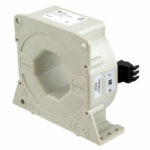
20311000101

20311000101

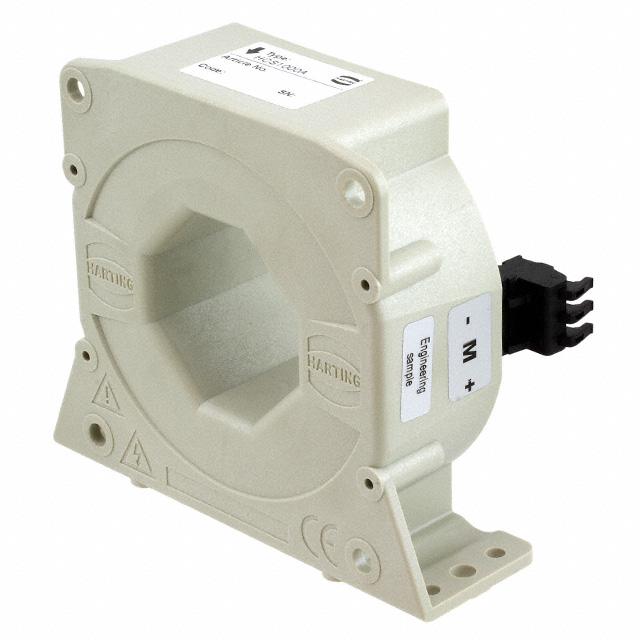
  • Description:SENSOR CURRENT HALL 1000A AC
  • Series:-
  • Mfr:HARTING
  • Package:Bulk

SKU:f273b1adc140 Category: Brand:

ChipApex WhatsApp

Consult the customer manager about the wholesale price.

consultation hotline:86-132-6715-2157

email:chipapexlimited@gmail.com
Contact the product manager for consultation. One-stop consultation is available.


Do you want a lower wholesale price? Please send us your inquiry and we will reply immediately.

*
*
*
*
Submitting!
Submission successful!
Submission failed!
Email error!
Phone number error!

Product Detailed Parameters

  • Description:SENSOR CURRENT HALL 1000A AC
  • Series:-
  • Mfr:HARTING
  • Package:Bulk
  • For Measuring:AC/DC
  • Sensor Type:Hall Effect, Closed Loop
  • Current - Sensing:1000A
  • Number of Channels:1
  • Output:Ratiometric, Voltage
  • Sensitivity:-
  • Frequency:100kHz
  • Linearity:±0.1%
  • Accuracy:±0.4%
  • Voltage - Supply:15V ~ 24V
  • Response Time:1µs
  • Current - Supply (Max):28mA
  • Operating Temperature:-40°C ~ 85°C
  • Grade:-
  • Qualification:-
  • Polarization:Bidirectional
  • Mounting Type:Panel Mount
  • Package / Case:Module, Single Pass Through
  • Supplier Device Package:-

Download product information

20311000101

Buying Guide
Summary

HARTING 20311000101 is selected in Current Sensors category when calibration, drift, and environment constraints must be validated early. Key specs include Description (SENSOR CURRENT HALL 1000A AC), Temperature (-40°C ~ 85°C), Package/case (Module, Single Pass Through), and Mounting (Panel Mount).

Selection Notes
  • For 20311000101, double-check the mounting type (Panel Mount) for your intended installation method.
  • Confirm the supply current (1000A) is acceptable for standby and active operation.
  • Verify the output type (Ratiometric, Voltage) and any logic-level requirements in your design.
  • Verify the operating temperature range (-40°C ~ 85°C) and derate as needed in your application.
Alternates & Substitutions
  • For Current Sensors substitutions, lock footprint/pinout and operating envelope first, then verify the critical performance conditions on your hardware.
  • Start by confirming the physical match (package/case Module, Single Pass Through, mounting Panel Mount, packaging Bulk) so the swap does not create a footprint risk.
  • When in doubt, treat the swap as an ECO: define acceptance criteria, then validate under worst-case operating corners.
  • If you need a second source, provide (package Module, Single Pass Through, supply 15V ~ 24V, frequency 100kHz) and we will suggest options to evaluate under a clear test plan.
FAQ

How do I validate sensor performance for 20311000101?
Test with real fixtures and environmental conditions, then confirm calibration, drift, and noise behavior meet your requirements.

Which Linearity is listed for 20311000101?
±0.1%

Which Sensor Type is specified for 20311000101?
Hall Effect, Closed Loop

What package/case is listed for 20311000101?
Module, Single Pass Through

Application Scenarios

Across practice, the question for HARTING 20311000101 in Current Sensors is whether it stays inside the electrical/thermal envelope while remaining easy to validate and support. Reliable environmental sensing enables better automation decisions and reduces operational risk. They monitor conditions such as temperature, humidity, light, gas concentration, or particulates for safety and efficiency. In consumer devices, compact sensing enables adaptive control under tight power budgets. Within agriculture, humidity and particulate sensing supports greenhouse automation where condensation and contaminants are common. Across data centers, distributed sensing improves hot-spot detection in constrained airflow channels between high-density racks. Environmental sensing focuses on drift, response time, contamination exposure, and compensation so readings remain meaningful over life.
Compatibility Advice
  • In practice, verify environmental stress assumptions (temperature, humidity, contamination) so sensing remains repeatable over life on the assembled PCB.
  • In practice, confirm calibration and compensation strategy so readings stay repeatable across production lots before release to production.
Project Fit
  • Good fit when you can test and document HARTING 20311000101 for Current Sensors integration with the real wiring and cabling, and you can measure error budgets and environmental drift so acceptance criteria are objective.
  • Poor fit when airflow and enclosure conditions vary widely and cannot be replicated for validation, because the key behaviors cannot be confirmed on the assembled system.
2031100010120311000101

Click on the inquiry