ChipApex | Global Electronic Components Supplier
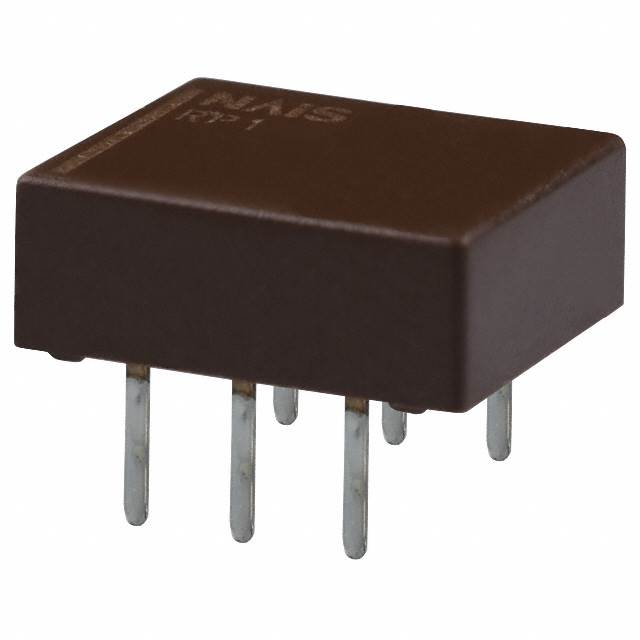
RP1-5V
Search Product
Search Post
— IC芯片 | 连接器 | 传感器 | 被动器件 —
Search productSearch post
— IC芯片 | 连接器 | 传感器 | 被动器件 —
Consult the customer manager about the wholesale price.
consultation hotline:86-132-6715-2157
email:chipapexlimited@gmail.com
Contact the product manager for consultation. One-stop consultation is available.
Do you want a lower wholesale price? Please send us your inquiry and we will reply immediately.
Panasonic Electric Works RP1-5V is used in High Frequency (RF) Relays category in RF signal paths where layout, grounding, and interface choices determine real performance. Key specs include Description (RELAY RF SPDT 100MA 5V), Temperature (-40°C ~ 70°C), Mounting (Through Hole), and Packaging (Tube).
Any tips for integrating RP1-5V into an RF signal path?
Pay attention to impedance continuity, grounding, connector transitions, and layout symmetry to minimize loss and reflections.
What Operate Time does RP1-5V have?
3 ms
What current consumption is specified for RP1-5V?
28.1 mA
Which Coil Voltage is specified for RP1-5V?
5VDC
When sourcing Panasonic Electric Works RP1-5V for High Frequency (RF) Relays, engineers typically focus on de-risking integration and keeping validation repeatable. In practice, return paths and coupling decide outcomes, so designers treat placement, shielding, and grounding as first-class requirements. Selection usually balances margin, qualification evidence, availability, and how repeatable the tuning process is in production. Within private LTE/5G small cells, RF behavior is validated for long duty cycles and temperature drift in compact enclosures. In outdoor sensors, moisture and condensation change RF conditions, so robustness is validated under real weather exposure. Across consumer routers, stable RF performance reduces returns caused by marginal range and intermittent throughput under heavy load. The remaining work is usually board-level: layout, thermal headroom, and verifying behavior at the edge of the operating envelope. For systems shipped at volume, predictable behavior is what keeps yield and field performance stable.
 RP1-5V
The activity of extra discounts on wholesale prices is in full swing…
Please fill in your contact information and we will send you the latest wholesale price list.