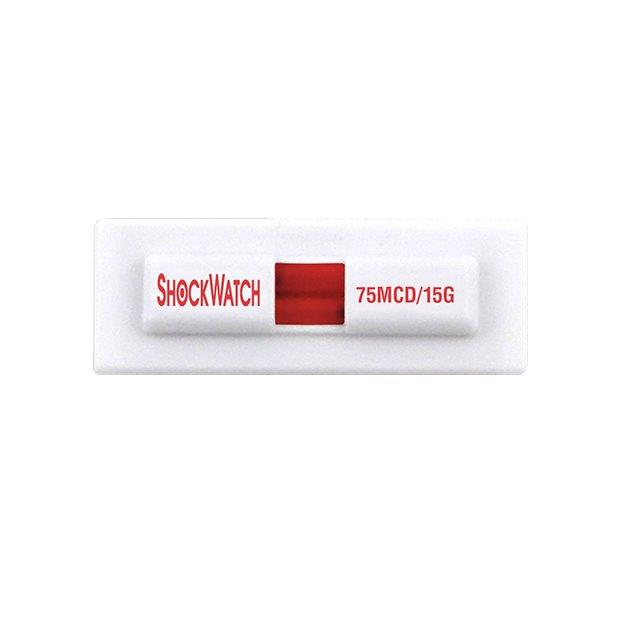
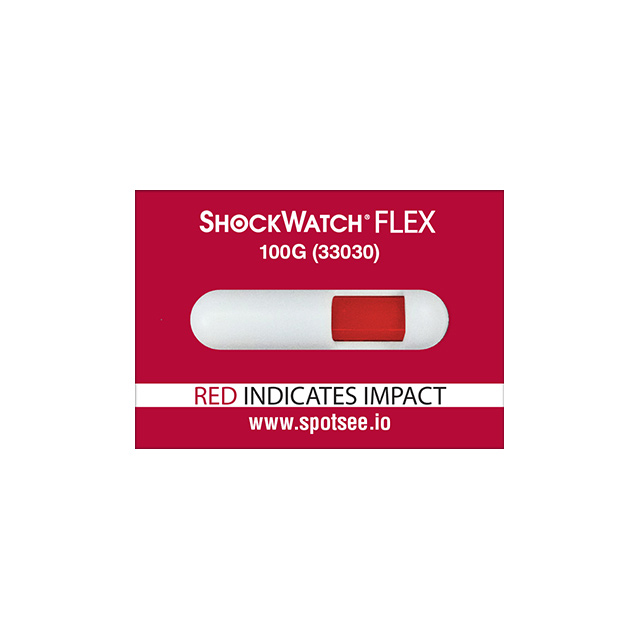
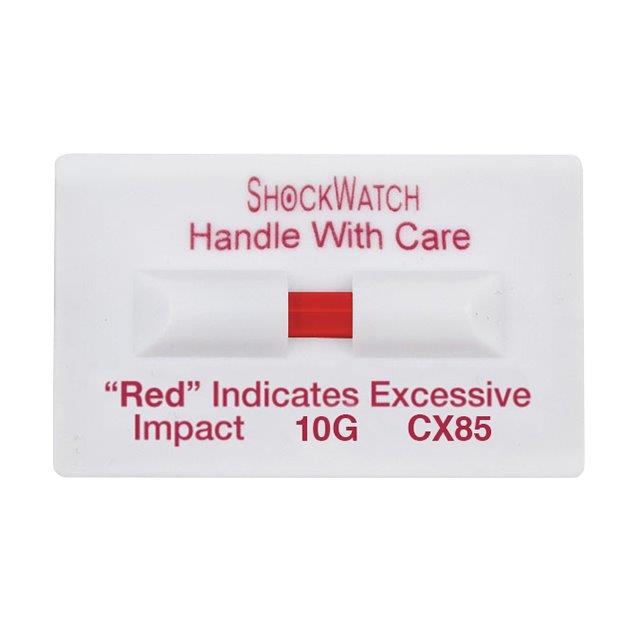
75MCD/15G

75MCD/15G

$4.60
  • Description:75 MINICLIP: DOUBLE TUBE*
  • Series:ShockWatch Clip
  • Mfr:SpotSee
  • Package:Bulk

SKU:d10f7924d165 Category: Brand:

  
  • Quantity
    • -
    • +
  •    
ChipApex WhatsApp

Consult the customer manager about the wholesale price.

consultation hotline:86-132-6715-2157

email:chipapexlimited@gmail.com
Contact the product manager for consultation. One-stop consultation is available.


Do you want a lower wholesale price? Please send us your inquiry and we will reply immediately.

*
*
*
*
Submitting!
Submission successful!
Submission failed!
Email error!
Phone number error!

Product Detailed Parameters

  • Description:75 MINICLIP: DOUBLE TUBE*
  • Series:ShockWatch Clip
  • Mfr:SpotSee
  • Package:Bulk
  • Sensor Type:Impact Sensor
  • Sensing Range:0 ~ 15G
  • Sensitivity:-
  • Output Type:-
  • Operating Temperature:-25°C ~ 80°C
  • Package / Case:Module
  • Mounting Type:Adhesive
  • Termination:-

Download product information

75MCD/15G

Buying Guide
Summary

SpotSee 75MCD-15G is selected in Shock Sensors category when calibration, drift, and environment constraints must be validated early. Key specs include Description (75 MINICLIP: DOUBLE TUBE*), Temperature (-25°C ~ 80°C), Package/case (Module), and Mounting (Adhesive).

Selection Notes
  • For 75MCD-15G, ensure the package/case (Module) and land pattern match your PCB layout before procurement.
  • Validate the operating temperature range (-25°C ~ 80°C) for your environment and margin.
  • Verify Sensing Range (0 ~ 15G) and compare it against your reference design limits.
  • Confirm the mounting type (Adhesive) is suitable for your production flow and reliability target.
Alternates & Substitutions
  • For Shock Sensors, compare the datasheet test conditions behind key specs and re-check the margins that were tightest during bring-up.
  • Treat package/case Module, mounting Adhesive, packaging Bulk as the first filter, then move on to electrical and performance checks.
  • Check that temperature -25°C ~ 80°C matches your system, then validate at corners instead of relying on typical values.
  • If you are qualifying a second source, align documentation/traceability requirements early to avoid surprises in procurement.
FAQ

Who is the manufacturer of 75MCD-15G?
SpotSee

How do I validate sensor performance for 75MCD-15G?
Test with real fixtures and environmental conditions, then confirm calibration, drift, and noise behavior meet your requirements.

What is the packaging of 75MCD-15G?
Bulk

What is the mounting method for 75MCD-15G?
Adhesive

Application Scenarios

In real deployments, for many Shock Sensors designs, SpotSee 75MCD-15G is vetted against electrical margins, thermal headroom, and mechanical integration before the BOM is frozen. Shock and vibration sensing is validated under realistic mechanical profiles so thresholds and false-trigger rates remain bounded. They measure acceleration and angular motion to support stabilization, navigation, and vibration analytics. In practice, engineers often consider bandwidth, noise density, bias drift, and mechanical mounting so sensor fusion remains robust. In industrial machinery, vibration analytics predicts bearing wear in hot, noisy enclosures. In navigation modules, IMU performance influences dead-reckoning accuracy when GNSS signals are weak or blocked. Within drones and robotics, inertial sensors drive attitude estimation in fast maneuvers, where vibration isolation and filtering prevent false drift.
Compatibility Advice
  • For compatibility, verify noise and vibration susceptibility under real operating conditions, not only bench setups. This avoids one-off tuning in production.
  • In board-level integration, check bandwidth and latency so the control loop behavior is predictable in production across temperature and supply corners.
  • To keep validation repeatable, check filtering and bandwidth choices so noise, latency, and stability align with the real control loop or measurement method. This helps field behavior stay predictable across lots.
Project Fit
  • Good fit when you can validate SpotSee 75MCD-15G for Shock Sensors integration under realistic load and noise, and you can measure error budgets and environmental drift so acceptance criteria are objective.
  • Poor fit when calibration and drift behavior cannot be reproduced, increasing long-term accuracy risk, because the integration depends on constraints that cannot be controlled across builds.
75MCD/15G75MCD/15G
$4.60
Buy Now