ZTP-315

ZTP-315

$4.10
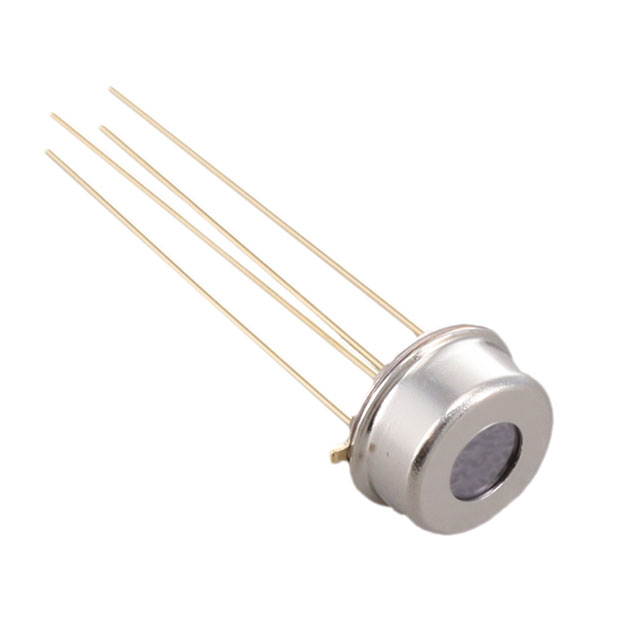
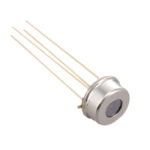
  • Description:SENSOR ANALOG -20C-100C TO205AA
  • Series:-
  • Mfr:Amphenol Advanced Sensors (Thermometrics)
  • Package:Tube

SKU:7872d6894342 Category: Brand:

  
  • Quantity
    • -
    • +
  •    
ChipApex WhatsApp

Consult the customer manager about the wholesale price.

consultation hotline:86-132-6715-2157

email:chipapexlimited@gmail.com
Contact the product manager for consultation. One-stop consultation is available.


Do you want a lower wholesale price? Please send us your inquiry and we will reply immediately.

*
*
*
*
Submitting!
Submission successful!
Submission failed!
Email error!
Phone number error!

Product Detailed Parameters

  • Description:SENSOR ANALOG -20C-100C TO205AA
  • Series:-
  • Mfr:Amphenol Advanced Sensors (Thermometrics)
  • Package:Tube
  • Sensor Type:Analog, Infrared (IR)
  • Sensing Temperature - Local:-20°C ~ 100°C
  • Sensing Temperature - Remote:-40°C ~ 120°C (IR)
  • Output Type:Analog Voltage
  • Voltage - Supply:-
  • Resolution:-
  • Features:-
  • Accuracy - Highest (Lowest):-
  • Test Condition:-
  • Operating Temperature:-20°C ~ 100°C
  • Mounting Type:Through Hole
  • Package / Case:TO-205AA, TO-5-4 Metal Can Variant
  • Supplier Device Package:-
  • Grade:-
  • Qualification:-

Download product information

ZTP-315

Buying Guide
Summary

Amphenol Advanced Sensors (Thermometrics) ZTP-315 is used in Analog and Digital Output category where integration and verification need to stay predictable. Key specs include Description (SENSOR ANALOG -20C-100C TO205AA), Packaging (Tube), Temperature (-20°C ~ 100°C), Package/case (TO-205AA, TO-5-4 Metal Can Variant), and Mounting (Through Hole).

Selection Notes
  • For ZTP-315, verify the package/case (TO-205AA, TO-5-4 Metal Can Variant) fits your mechanical constraints and assembly process.
  • Make sure the output type (Analog Voltage) matches your interface requirements and levels.
  • Validate the operating temperature range (-20°C ~ 100°C) for your environment and margin.
Alternates & Substitutions
  • For Analog and Digital Output, validate alternates under worst-case corners rather than assuming typical-only conditions represent production builds.
  • Start by confirming the physical match (package/case TO-205AA, TO-5-4 Metal Can Variant, mounting Through Hole, packaging Tube) so the swap does not create a footprint risk.
  • When in doubt, treat the swap as an ECO: define acceptance criteria, then validate under worst-case operating corners.
  • If you need a second source, provide (package TO-205AA, TO-5-4 Metal Can Variant, interface Analog Voltage) and we will suggest options to evaluate under a clear test plan.
FAQ

Which Sensing Temperature - Remote is specified for ZTP-315?
-40°C ~ 120°C (IR)

What package/case does ZTP-315 use?
TO-205AA, TO-5-4 Metal Can Variant

What is the output type of ZTP-315?
Analog Voltage

Which operating temperature range is specified for ZTP-315?
-20°C ~ 100°C

Application Scenarios

When sourcing Amphenol Advanced Sensors (Thermometrics) ZTP-315 for Analog and Digital Output, engineers typically focus on de-risking integration and keeping validation repeatable. In practice, they help keep substitutions safer by anchoring decisions to measurable constraints rather than implicit tuning. They provide a focused function that reduces system integration risk and helps meet requirements in real deployments. Across laboratory and test systems, repeatable behavior supports calibration workflows and consistent measurements. In long-life equipment, documented margins and qualification evidence reduce substitution risk over the product lifecycle. Within building automation, stable integration reduces service calls because nodes behave consistently across wiring variation and noisy grounds. Within telecom racks, predictable behavior helps avoid intermittent issues that are expensive to diagnose during maintenance windows.
Compatibility Advice
  • On the assembled PCB, validate the part under realistic load and supply noise so edge cases show up before production ramp. This keeps integration from depending on typical-only conditions.
  • In practice, verify tolerance stack-up and assembly constraints so mechanical fit does not depend on fragile adjustments with the real source, load, and wiring.
  • To keep validation repeatable, validate failure behavior and recovery so faults remain bounded and diagnosable in the deployed system. This helps field behavior stay predictable across lots.
Project Fit
  • Less ideal when integrating Amphenol Advanced Sensors (Thermometrics) ZTP-315 for Analog and Digital Output, the system is tuned case-by-case and cannot be reproduced, because it becomes difficult to prove margin across production variance.
  • Most suitable when you can measure and verify Amphenol Advanced Sensors (Thermometrics) ZTP-315 for Analog and Digital Output integration under realistic load and noise, when you need performance that stays stable across real operating corners.
ZTP-315ZTP-315
$4.10
Buy Now