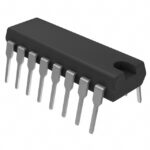
74HC123N,652

74HC123N,652

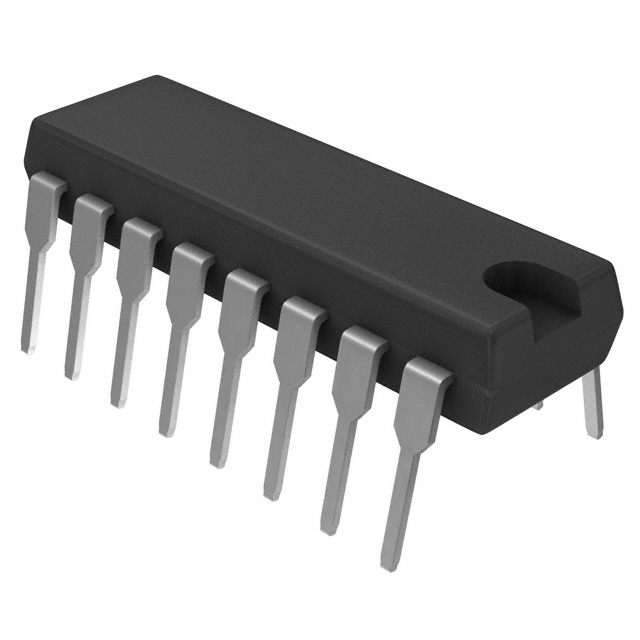
  • Description:IC MULTIVIBRATOR 65NS 16DIP
  • Series:74HC
  • Mfr:NXP USA Inc.
  • Package:Tube

SKU:80f18b177d5f Category: Brand:

ChipApex WhatsApp

Consult the customer manager about the wholesale price.

consultation hotline:86-132-6715-2157

email:chipapexlimited@gmail.com
Contact the product manager for consultation. One-stop consultation is available.


Do you want a lower wholesale price? Please send us your inquiry and we will reply immediately.

*
*
*
*
Submitting!
Submission successful!
Submission failed!
Email error!
Phone number error!

Product Detailed Parameters

  • Description:IC MULTIVIBRATOR 65NS 16DIP
  • Series:74HC
  • Mfr:NXP USA Inc.
  • Package:Tube
  • Logic Type:Monostable
  • Independent Circuits:2
  • Schmitt Trigger Input:No
  • Propagation Delay:65 ns
  • Current - Output High, Low:5.2mA, 5.2mA
  • Voltage - Supply:2 V ~ 6 V
  • Operating Temperature:-40°C ~ 125°C
  • Mounting Type:Through Hole
  • Package / Case:16-DIP (0.300", 7.62mm)
  • Supplier Device Package:16-DIP
  • Grade:-
  • Qualification:-

Download product information

74HC123N,652

Buying Guide
Summary

NXP USA Inc. 74HC123N652 is a component in Multivibrators category typically evaluated for fit, operating limits, and supportability in production. Key specs include Description (IC MULTIVIBRATOR 65NS 16DIP), Series (74HC), Packaging (Tube), Supply (2 V ~ 6 V), and Temperature (-40°C ~ 125°C).

Selection Notes
  • For 74HC123N652, double-check the mounting type (Through Hole) for your intended installation method.
  • Make sure your rails cover (2 V ~ 6 V) across temperature and load, with adequate margin.
  • Verify the operating temperature range (-40°C ~ 125°C) and derate as needed in your application.
Alternates & Substitutions
  • For Multivibrators substitutions, lock footprint/pinout and operating envelope first, then verify the critical performance conditions on your hardware.
  • When evaluating alternates, treat package/case 16-DIP (0.300", 7.62mm), supplier package 16-DIP, mounting Through Hole as non-negotiable unless you are re-spinning the PCB.
  • Verify the alternate stays within supply 2 V ~ 6 V, temperature -40°C ~ 125°C across startup, load steps, and worst-case temperature.
  • When in doubt, treat the swap as an ECO: define acceptance criteria, then validate under worst-case operating corners.
FAQ

How do I confirm compatibility for 74HC123N652?
Match mechanical footprint first, then verify electrical limits and operating conditions against your system constraints.

What is the Propagation Delay of 74HC123N652?
65 ns

Which Supplier Device Package is listed for 74HC123N652?
16-DIP

Can you confirm the Logic Type for 74HC123N652?
Monostable

Application Scenarios

In real deployments, for many Multivibrators designs, NXP USA Inc. 74HC123N652 is vetted against electrical margins, thermal headroom, and mechanical integration before the BOM is frozen. A focused component can shorten bring-up by making measurements and acceptance criteria straightforward. They help keep substitutions safer by anchoring decisions to measurable constraints rather than implicit tuning. Within distributed installations, predictable margins reduce nuisance faults caused by wiring variation and environmental noise. In outdoor deployments, robust behavior across temperature extremes prevents failures that only appear seasonally. In real deployments, across robotics platforms, stable behavior under vibration and fast load changes keeps control loops predictable and reduces tuning time.
Compatibility Advice
  • In qualification work, verify interface levels and timing margins against the host so integration does not depend on typical-only conditions before freezing the BOM.
  • For compatibility, plan measurable bring-up tests so acceptance criteria are objective and repeatable across lots before release to production.
Project Fit
  • Good fit when you can verify NXP USA Inc. 74HC123N652 for Multivibrators integration under realistic load and noise, and you need a design that remains robust across temperature, supply variation, and assembly tolerance.
  • Poor fit when substitutions are likely but acceptance criteria are not defined, because the remaining risk is system-level and cannot be bounded by datasheet checks alone.
74HC123N,65274HC123N,652

Click on the inquiry