ChipApex | Global Electronic Components Supplier
100LSQ33000MEFC64X119
Search Product
Search Post
— IC芯片 | 连接器 | 传感器 | 被动器件 —
Search productSearch post
— IC芯片 | 连接器 | 传感器 | 被动器件 —
Consult the customer manager about the wholesale price.
consultation hotline:86-132-6715-2157
email:chipapexlimited@gmail.com
Contact the product manager for consultation. One-stop consultation is available.
Do you want a lower wholesale price? Please send us your inquiry and we will reply immediately.
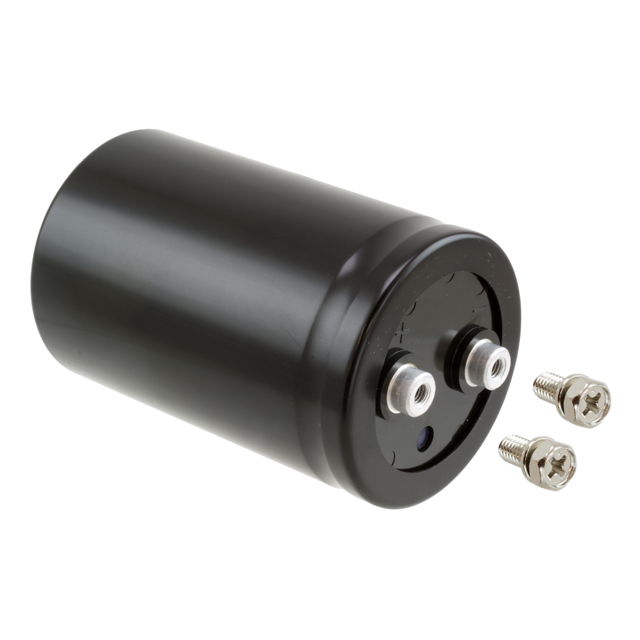
Rubycon 100LSQ33000MEFC64X119 is used in Aluminum Electrolytic Capacitors category where derating, temperature behavior, and mechanical fit affect long-term stability. Key specs include Description (CAP ALUM 33000UF 20% 100V SCREW), Capacitance (33000 µF), Rated voltage (100 V), Tolerance (±20%), and Temperature (-40°C ~ 85°C).
How do I avoid common capacitor selection mistakes with 100LSQ33000MEFC64X119?
Check DC bias/temperature effects, ripple heating, and mechanical constraints, then validate under worst-case load and temperature.
Which operating temperature range is specified for 100LSQ33000MEFC64X119?
-40°C ~ 85°C
Can you confirm the Tolerance for 100LSQ33000MEFC64X119?
±20%
Which Height - Seated (Max) is specified for 100LSQ33000MEFC64X119?
4.803" (122.00mm)
Rubycon 100LSQ33000MEFC64X119 shows up under Aluminum Electrolytic Capacitors when designers want a well-bounded, datasheet-driven building block instead of a fragile board-level workaround. They provide energy storage and decoupling, shaping impedance versus frequency to stabilize rails and signal paths. Selection depends on ESR/ESL, ripple current, temperature behavior, dielectric stability, and lifetime under stress. In consumer products, compact passives balance cost, lifetime, and thermal rise in sealed housings. In real deployments, across motor-control power stages, capacitors are qualified for ripple current and heat rise because stress is repetitive and cumulative. In instrumentation, stable dielectric behavior prevents drift that would otherwise limit measurement repeatability. Electrolytic capacitor selection centers on ripple current, lifetime versus temperature, and ESR behavior under load and aging. In many systems, the cost is in integration and validation, so reducing uncertainty is the real win.
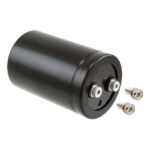 100LSQ33000MEFC64X119
The activity of extra discounts on wholesale prices is in full swing…
Please fill in your contact information and we will send you the latest wholesale price list.