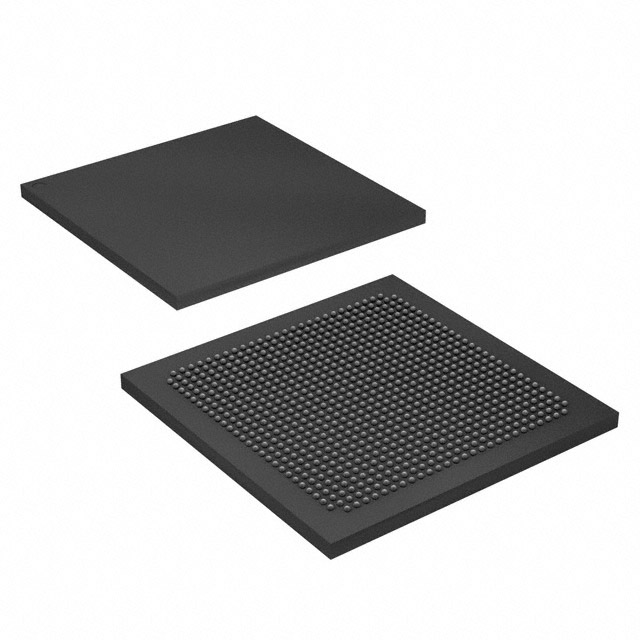
10AS016E3F29E2LG

10AS016E3F29E2LG

$1,025.62
  • Description:IC SOC CORTEX-A9 1.5GHZ 780FBGA
  • Series:Arria 10 SX

SKU:f6256811e4e5 Category: Brand:

  
  • Quantity
    • -
    • +
  •    
ChipApex WhatsApp

Consult the customer manager about the wholesale price.

consultation hotline:86-132-6715-2157

email:chipapexlimited@gmail.com
Contact the product manager for consultation. One-stop consultation is available.


Do you want a lower wholesale price? Please send us your inquiry and we will reply immediately.

*
*
*
*
Submitting!
Submission successful!
Submission failed!
Email error!
Phone number error!

Product Detailed Parameters

  • Description:IC SOC CORTEX-A9 1.5GHZ 780FBGA
  • Series:Arria 10 SX
  • Mfr:Altera
  • Package:Tray
  • Architecture:MCU, FPGA
  • Core Processor:Dual ARM® Cortex®-A9 MPCore™ with CoreSight™
  • Flash Size:-
  • RAM Size:256KB
  • Peripherals:DMA, POR, WDT
  • Connectivity:EBI/EMI, Ethernet, I2C, MMC/SD/SDIO, SPI, UART/USART, USB OTG
  • Speed:1.5GHz
  • Primary Attributes:FPGA - 160K Logic Elements
  • Operating Temperature:0°C ~ 100°C (TJ)
  • Grade:-
  • Qualification:-
  • Package / Case:780-BBGA, FCBGA
  • Supplier Device Package:780-FBGA, FC (29x29)

Download product information

10AS016E3F29E2LG

Buying Guide
Summary

Altera 10AS016E3F29E2LG is used in System On Chip (SoC) category where integration and verification need to stay predictable. Key specs include Description (IC SOC CORTEX-A9 1.5GHZ 780FBGA), Series (Arria 10 SX), Packaging (Tray), Temperature (0°C ~ 100°C (TJ)), and Package/case (780-BBGA, FCBGA).

Selection Notes
  • For 10AS016E3F29E2LG, validate the operating temperature range (0°C ~ 100°C (TJ)) for your environment and margin.
  • Check Architecture (MCU, FPGA) against the datasheet conditions and your system-level constraints.
  • Verify the package/case (780-BBGA, FCBGA) fits your mechanical constraints and assembly process.
Alternates & Substitutions
  • For System On Chip (SoC), compare the datasheet test conditions behind key specs and re-check the margins that were tightest during bring-up.
  • If the alternate is “close but not identical”, document the differences and define a measurable acceptance test for production.
  • Lock the mechanical constraints first (package/case 780-BBGA, FCBGA, supplier package 780-FBGA, FC (29x29), packaging Tray) before comparing performance specs.
  • If you are qualifying a second source, align documentation/traceability requirements early to avoid surprises in procurement.
FAQ

What should I verify before using 10AS016E3F29E2LG in production?
Confirm footprint/pinout, min/max ratings, operating temperature, and the datasheet test conditions behind key specifications.

Can you confirm the Supplier Device Package for 10AS016E3F29E2LG?
780-FBGA, FC (29x29)

What is the core processor of 10AS016E3F29E2LG?
Dual ARM® Cortex®-A9 MPCore™ with CoreSight™

Can you confirm the packaging for 10AS016E3F29E2LG?
Tray

Application Scenarios

For Altera 10AS016E3F29E2LG used in System On Chip (SoC) designs, the shortlist is often driven by predictable margins and a straightforward validation plan. In real deployments, they execute firmware or algorithms and coordinate peripherals, communications, and security features that define product capabilities. Selection is driven by compute headroom, peripheral mix, toolchain maturity, lifecycle availability, and secure boot/update strategy. In practice, once the interface and envelope are agreed, engineers focus on proving behavior on the actual PCB stack-up. In medical devices, deterministic processing and audit logging support regulated workflows and long-term maintainability. In building automation, they aggregate sensor data and run local logic to keep systems functional even when cloud connectivity is intermittent. In consumer products, compute and peripheral integration reduces BOM and speeds product iterations while maintaining stable user experience. Systems with healthy margins usually tolerate production variance and environmental stress with fewer intermittent failures.
Compatibility Advice
  • To keep validation repeatable, plan debug and production test access early so firmware loading, boundary checks, and fault recovery are repeatable before release to production.
  • In practice, validate power-domain assumptions and decoupling near the pins so brownouts and erratic behavior do not appear at temperature corners with the real source, load, and wiring.
  • In practice, validate that alternate parts preserve boot modes, memory interfaces, and critical timing assumptions rather than only pinout before committing to volume builds.
Project Fit
  • Works best when you can validate Altera 10AS016E3F29E2LG for System On Chip (SoC) integration in the final enclosure, and you can provision programming and debug access so production test and field recovery are practical. On the other hand, riskier when integrating Altera 10AS016E3F29E2LG for System On Chip (SoC), I/O voltage domains are uncertain, increasing long-term overstress and compatibility risk, because the key behaviors cannot be confirmed on the assembled system.
10AS016E3F29E2LG10AS016E3F29E2LG
$1,025.62
Buy Now