2303

2303

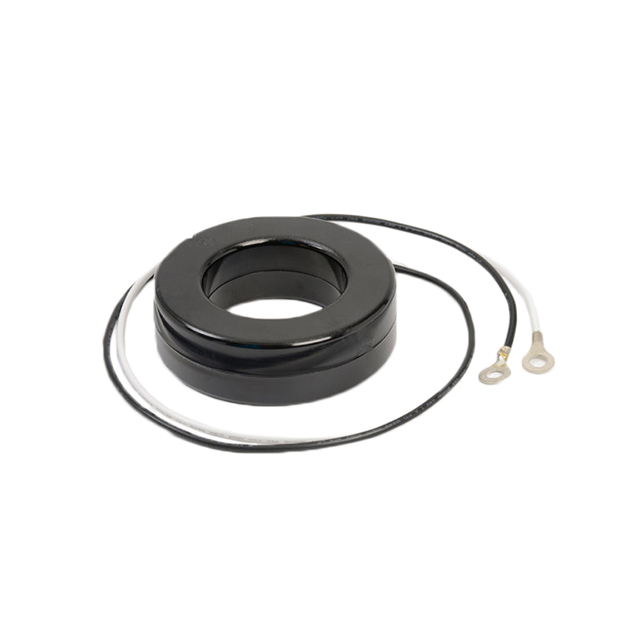
  • Description:CURR SENS XFMR 120:1 600A INLINE
  • Series:-
  • Mfr:Simpson Electric
  • Package:Retail Package

SKU:d827f12e35ea Category: Brand:

ChipApex WhatsApp

Consult the customer manager about the wholesale price.

consultation hotline:86-132-6715-2157

email:chipapexlimited@gmail.com
Contact the product manager for consultation. One-stop consultation is available.


Do you want a lower wholesale price? Please send us your inquiry and we will reply immediately.

*
*
*
*
Submitting!
Submission successful!
Submission failed!
Email error!
Phone number error!

Product Detailed Parameters

  • Description:CURR SENS XFMR 120:1 600A INLINE
  • Series:-
  • Mfr:Simpson Electric
  • Package:Retail Package
  • Frequency Range:-
  • Type:Non-Invasive (Solid Core)
  • Inductance:-
  • ET (Volt-Time):-
  • Current Ratio:-
  • DC Resistance (DCR):-
  • Ratings:-
  • Mounting Type:Free Hanging (In-Line)
  • Size / Dimension:3.560" Dia (90.42mm)
  • Height - Seated (Max):1.100" (27.94mm)
  • Termination Style:Wire Leads
  • Turns Ratio - Primary:Secondary:120:01:00
  • Current Rating (Amps):600 A

Download product information

2303

Buying Guide
Summary

Simpson Electric 2303 is sourced in Current Sense Transformers category when teams want clear constraints and a repeatable validation path. Key specs include Description (CURR SENS XFMR 120:1 600A INLINE), Type (Non-Invasive (Solid Core)), Packaging (Retail Package), and Mounting (Free Hanging (In-Line)).

Selection Notes
  • For 2303, double-check the mounting type (Free Hanging (In-Line)) for your intended installation method.
  • Confirm current consumption (600 A) is within your worst-case power budget.
  • Validate Height - Seated (Max) (1.100" (27.94mm)) under the expected test conditions in your application.
Alternates & Substitutions
  • For Current Sense Transformers, treat alternates as an integration task and validate the assumptions that matter on the assembled system.
  • Confirm startup states and fault behavior are equivalent so the alternate does not change system behavior during brownouts or resets.
  • Confirm the alternate stays inside the electrical and environmental envelope, not only the headline spec.
  • Confirm compliance/qualification needs (for example RoHS/REACH or grade) before approving a second source for production.
FAQ

What should I compare when selecting an alternate for 2303?
Compare footprint/pinout, key electrical limits, temperature range, and interface requirements, then validate under worst-case conditions.

What mounting type does 2303 use?
Free Hanging (In-Line)

What current consumption is specified for 2303?
600 A

Which Turns Ratio - Primary:Secondary is specified for 2303?
120:01:00

Application Scenarios

Simpson Electric 2303 is listed under the Current Sense Transformers category and is commonly used when correctness, reliability, and qualification repeatability matter. They often define safety margins and EMC behavior in SMPS, PoE, pulse transmission, and sensing solutions. In practice, a properly designed transformer stage improves safety, efficiency, and predictable field performance. In telecom power modules, magnetics and isolation support regulatory compliance and stable operation across multi-board systems. In production, insulation systems and creepage/clearance must match regional safety standards and long-life expectations. Within PoE and Ethernet, magnetics provide isolation and common-mode rejection in electrically noisy facilities.
Compatibility Advice
  • Before committing to volume builds, validate losses, thermal rise, and saturation under the real waveform so efficiency and temperature margins hold after heat soak. This keeps acceptance criteria measurable and repeatable.
  • With the final enclosure and cabling, verify impedance or ESR behavior across frequency so the real dynamics match your stability and noise expectations. This reduces the chance that substitutions push hidden limits.
Project Fit
  • Works best when you can test and document Simpson Electric 2303 for Current Sense Transformers integration on the assembled PCB, typically when you have a defined accuracy budget and can verify drift and tolerance stack-up in production.
23032303

Click on the inquiry