ChipApex | Global Electronic Components Supplier
88MW320-A0-NAPI/AZ
Search Product
Search Post
— IC芯片 | 连接器 | 传感器 | 被动器件 —
Search productSearch post
— IC芯片 | 连接器 | 传感器 | 被动器件 —
Consult the customer manager about the wholesale price.
consultation hotline:86-132-6715-2157
email:chipapexlimited@gmail.com
Contact the product manager for consultation. One-stop consultation is available.
Do you want a lower wholesale price? Please send us your inquiry and we will reply immediately.
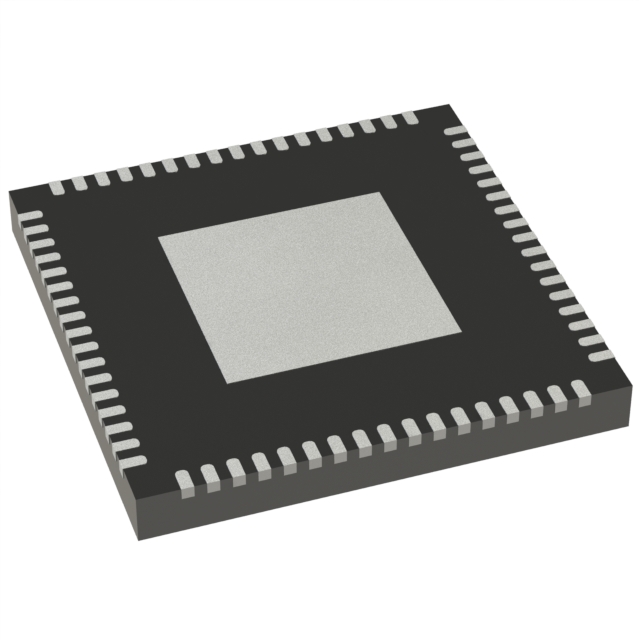
NXP USA Inc. 88MW320-A0-NAPI-AZ is evaluated in RF Transceiver ICs category when frequency coverage and integration details must hold up in the real enclosure. Key specs include Description (IC RF TXRX+MCU BLE 68HVQFN), Temperature (-40°C ~ 105°C (TA)), Package/case (68-VFQFN Exposed Pad), Mounting (Surface Mount), and Packaging (Tape & Reel (TR)).
What are common selection points for RF parts like 88MW320-A0-NAPI-AZ?
Compare frequency coverage, loss/isolation trade-offs, power handling, and mechanical interface constraints (connectors, mounting).
Which operating frequency is specified for 88MW320-A0-NAPI-AZ?
2.4GHz
What Power - Output does 88MW320-A0-NAPI-AZ have?
26dBm
What is the Current - Transmitting of 88MW320-A0-NAPI-AZ?
27.6mA ~ 183.3mA
For NXP USA Inc. 88MW320-A0-NAPI-AZ in the RF Transceiver ICs category, teams usually prioritize documentation clarity and repeatable behavior in production. Because RF is system-defined, teams validate with realistic antennas, cables, and enclosures rather than assuming lab fixtures represent the product. In practice, return paths and coupling decide outcomes, so designers treat placement, shielding, and grounding as first-class requirements. A small set of stress tests often identifies the limiting assumptions long before production ramp. In industrial sensing, RF stability and filtering influence range accuracy and false-detect rate. Within industrial handheld radios, RF robustness is validated under shock and battery sag because enclosure effects and supply droop change margins. In rugged handhelds, stability under vibration and low battery conditions is treated as a primary constraint for RF qualification. When the constraints are clear, validation effort is more efficient and results are easier to compare across builds.
 88MW320-A0-NAPI/AZ
The activity of extra discounts on wholesale prices is in full swing…
Please fill in your contact information and we will send you the latest wholesale price list.