ChipApex | Global Electronic Components Supplier
A100-APS
Search Product
Search Post
— IC芯片 | 连接器 | 传感器 | 被动器件 —
Search productSearch post
— IC芯片 | 连接器 | 传感器 | 被动器件 —
Consult the customer manager about the wholesale price.
consultation hotline:86-132-6715-2157
email:chipapexlimited@gmail.com
Contact the product manager for consultation. One-stop consultation is available.
Do you want a lower wholesale price? Please send us your inquiry and we will reply immediately.
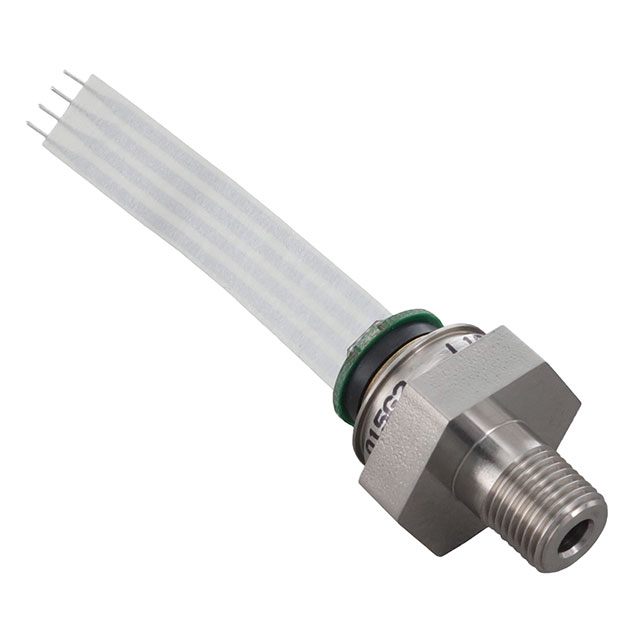
Atlas Scientific A100-APS is selected in Pressure Sensors, Transducers category when calibration, drift, and environment constraints must be validated early. Key specs include Description (A-100 Analog Pressure Sensor), Output type (Analog Voltage), Temperature (-40°C ~ 105°C), and Package/case (Cylinder, Threaded).
How do I validate sensor performance for A100-APS?
Test with real fixtures and environmental conditions, then confirm calibration, drift, and noise behavior meet your requirements.
Which Operating Pressure is specified for A100-APS?
100PSI (689.48kPa)
Which Output is specified for A100-APS?
0.5 V ~ 4.5 V
What Accuracy does A100-APS have?
±0.1PSI (0.69kPa)
When sourcing Atlas Scientific A100-APS for Pressure Sensors, Transducers, engineers typically focus on de-risking integration and keeping validation repeatable. In real deployments, pressure sensing emphasizes porting, response time, drift, and compensation so accuracy remains stable under real mechanical and thermal stress. Reliable environmental sensing enables better automation decisions and reduces operational risk. They monitor conditions such as temperature, humidity, light, gas concentration, or particulates for safety and efficiency. In consumer devices, compact sensing enables adaptive control under tight power budgets. In practice, within industrial safety, gas and smoke sensing is treated as a reliability problem, so calibration and drift behavior are validated over time. In real deployments, across smart buildings, environmental sensors drive HVAC optimization in ceiling nodes exposed to dust and changing airflow patterns. With the boundaries defined early, teams can validate faster and keep failure modes more predictable.
 A100-APS
The activity of extra discounts on wholesale prices is in full swing…
Please fill in your contact information and we will send you the latest wholesale price list.