ChipApex | Global Electronic Components Supplier
CPPC1-HT76P
Search Product
Search Post
— IC芯片 | 连接器 | 传感器 | 被动器件 —
Search productSearch post
— IC芯片 | 连接器 | 传感器 | 被动器件 —
Consult the customer manager about the wholesale price.
consultation hotline:86-132-6715-2157
email:chipapexlimited@gmail.com
Contact the product manager for consultation. One-stop consultation is available.
Do you want a lower wholesale price? Please send us your inquiry and we will reply immediately.
Cardinal Components Inc. CPPC1-HT76P is selected in Programmable Oscillators category when storage behavior must remain predictable across temperature and production variance. Key specs include Description (OSC PROG CMOS 5V 100PPM STBY), Type (XO (Standard)), Temperature (-40°C ~ 85°C), Package/case (14-DIP, 4 Leads (Full Size, Metal Can)), and Mounting (Through Hole).
Any tips for reliable operation with CPPC1-HT76P?
Ensure robust power sequencing, adequate decoupling capacitors, and verify signal integrity on high-speed data buses.
What is the Base Resonator of CPPC1-HT76P?
Crystal
Which Output is specified for CPPC1-HT76P?
CMOS
Which Frequency Stability is specified for CPPC1-HT76P?
±100ppm
For Cardinal Components Inc. CPPC1-HT76P in the Programmable Oscillators category, teams usually prioritize documentation clarity and repeatable behavior in production. In practice, they help close timing for processors, data converters, and high-speed links by providing stable references across voltage and temperature. In many platforms, clock parts directly influence BER, sampling accuracy, and long-term stability during 24/7 operation. From a validation perspective, the goal is confirming the part still behaves well under real loading and real noise sources. Within industrial motion control, timing components must resist inverter noise so capture and PWM timing remains repeatable. In embedded gateways, stable RTC and clocking improve logging accuracy and coordinated events across distributed sensor nodes. In high-speed digital designs, well-distributed clocks simplify timing closure and reduce re-spin risk caused by marginal setup/hold windows. In real deployments, a well-bounded selection simplifies qualification and makes future substitutions easier to manage.
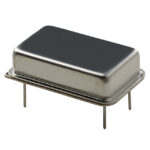 CPPC1-HT76P
The activity of extra discounts on wholesale prices is in full swing…
Please fill in your contact information and we will send you the latest wholesale price list.