CPPC1-HT7PT

CPPC1-HT7PT

  • Description:OSC PROG CMOS 5V 50PPM EN/DS
  • Series:FIPO™ CPP
  • Mfr:Cardinal Components Inc.
  • Package:Tube

SKU:3caaf1aac709 Category: Brand:

ChipApex WhatsApp

Consult the customer manager about the wholesale price.

consultation hotline:86-132-6715-2157

email:chipapexlimited@gmail.com
Contact the product manager for consultation. One-stop consultation is available.


Do you want a lower wholesale price? Please send us your inquiry and we will reply immediately.

*
*
*
*
Submitting!
Submission successful!
Submission failed!
Email error!
Phone number error!

Product Detailed Parameters

  • Description:OSC PROG CMOS 5V 50PPM EN/DS
  • Series:FIPO™ CPP
  • Mfr:Cardinal Components Inc.
  • Package:Tube
  • Base Resonator:Crystal
  • Type:XO (Standard)
  • Programmable Type:Programmed by Digi-Key (Enter your frequency in Web Order Notes)
  • Available Frequency Range:1 MHz ~ 133 MHz
  • Function:Enable/Disable
  • Output:CMOS
  • Voltage - Supply:5V
  • Frequency Stability:±50ppm
  • Frequency Stability (Total):-
  • Operating Temperature:-40°C ~ 85°C
  • Spread Spectrum Bandwidth:-
  • Current - Supply (Max):45mA
  • Ratings:-
  • Mounting Type:Through Hole
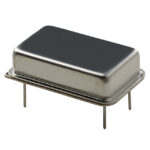
  • Package / Case:14-DIP, 4 Leads (Full Size, Metal Can)
  • Size / Dimension:0.819" L x 0.520" W (20.80mm x 13.20mm)
  • Height - Seated (Max):0.200" (5.08mm)

Download product information

CPPC1-HT7PT

Buying Guide
Summary

Cardinal Components Inc. CPPC1-HT7PT is selected in Programmable Oscillators category when storage behavior must remain predictable across temperature and production variance. Key specs include Description (OSC PROG CMOS 5V 50PPM EN/DS), Type (XO (Standard)), Temperature (-40°C ~ 85°C), Package/case (14-DIP, 4 Leads (Full Size, Metal Can)), and Mounting (Through Hole).

Selection Notes
  • For CPPC1-HT7PT, confirm the operating temperature range (-40°C ~ 85°C) meets your deployment conditions.
  • Confirm Height - Seated (Max) (0.200" (5.08mm)) is suitable for your use case and operating conditions.
  • Make sure the mounting type (Through Hole) matches how the part will be installed and inspected.
  • Ensure the supply current (45mA) is acceptable for battery life and thermal limits.
Alternates & Substitutions
  • In Programmable Oscillators designs, define acceptance criteria up front so alternates can be qualified and repeated in production.
  • Before approving a second source, compare the functional mode matrix and the test conditions behind the marketing headline specs.
  • Confirm the real operating corners (supply 5V, temperature -40°C ~ 85°C) and avoid swaps that only work at typical conditions.
  • For MCU/memory substitutions, verify interface timing and power sequencing, then validate firmware behavior under worst-case conditions.
FAQ

Any tips for reliable operation with CPPC1-HT7PT?
Ensure robust power sequencing, adequate decoupling capacitors, and verify signal integrity on high-speed data buses.

What frequency range is listed for CPPC1-HT7PT?
1 MHz ~ 133 MHz

Which operating temperature range is specified for CPPC1-HT7PT?
-40°C ~ 85°C

What package/case does CPPC1-HT7PT use?
14-DIP, 4 Leads (Full Size, Metal Can)

Application Scenarios

In practice, selecting Cardinal Components Inc. CPPC1-HT7PT for Programmable Oscillators usually comes down to meeting the system constraints that matter most: limits, interfaces, and testability in the real build. In practice, they generate, buffer, divide, or clean clocks so digital domains remain synchronized and interface margins stay within specification. Key considerations are jitter, phase noise, aging, startup behavior, and how a clock tree is distributed across dense PCBs. In telecom and networking, jitter budgets and timing distribution determine link stability in 24/7 racks. In telecom and networking, timing components keep Ethernet switches and line cards synchronized in 24/7 racks with limited airflow and strict jitter budgets. In industrial motion control, they stabilize capture timing and PWM generation in servo drives exposed to inverter EMI and large thermal gradients. From a lifecycle perspective, clear selection criteria and repeatable validation practices make long-term support simpler.
Compatibility Advice
  • Before committing to volume builds, verify startup, enable, and load conditions so oscillation is deterministic across temperature and aging. This reduces the chance that substitutions push hidden limits.
  • For production stability, confirm jitter/phase-noise assumptions with the real power and grounding so system timing margins remain measurable. This helps field behavior stay predictable across lots.
Project Fit
  • Good fit when you can verify Cardinal Components Inc. CPPC1-HT7PT for Programmable Oscillators integration across temperature and supply corners, and you have defined jitter budgets and controlled routing for clock distribution.
  • Poor fit when clocks must traverse uncontrolled harnesses or noisy return paths, because the behavior cannot be verified in a repeatable way.
CPPC1-HT7PTCPPC1-HT7PT

Click on the inquiry