CPPC1-LT56T

CPPC1-LT56T

  • Description:OSC PROG CMOS 3.3V 100PPM EN/DS
  • Series:FIPO™ CPP
  • Mfr:Cardinal Components Inc.
  • Package:Tube

SKU:fe92dbcb3d37 Category: Brand:

ChipApex WhatsApp

Consult the customer manager about the wholesale price.

consultation hotline:86-132-6715-2157

email:chipapexlimited@gmail.com
Contact the product manager for consultation. One-stop consultation is available.


Do you want a lower wholesale price? Please send us your inquiry and we will reply immediately.

*
*
*
*
Submitting!
Submission successful!
Submission failed!
Email error!
Phone number error!

Product Detailed Parameters

  • Description:OSC PROG CMOS 3.3V 100PPM EN/DS
  • Series:FIPO™ CPP
  • Mfr:Cardinal Components Inc.
  • Package:Tube
  • Base Resonator:Crystal
  • Type:XO (Standard)
  • Programmable Type:Programmed by Digi-Key (Enter your frequency in Web Order Notes)
  • Available Frequency Range:1 MHz ~ 100 MHz
  • Function:Enable/Disable
  • Output:CMOS
  • Voltage - Supply:3.3V
  • Frequency Stability:±100ppm
  • Frequency Stability (Total):-
  • Operating Temperature:-20°C ~ 70°C
  • Spread Spectrum Bandwidth:-
  • Current - Supply (Max):25mA
  • Ratings:-
  • Mounting Type:Through Hole
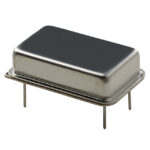
  • Package / Case:14-DIP, 4 Leads (Full Size, Metal Can)
  • Size / Dimension:0.819" L x 0.520" W (20.80mm x 13.20mm)
  • Height - Seated (Max):0.200" (5.08mm)

Download product information

CPPC1-LT56T

Buying Guide
Summary

Cardinal Components Inc. CPPC1-LT56T is selected in Programmable Oscillators category when storage behavior must remain predictable across temperature and production variance. Key specs include Description (OSC PROG CMOS 3.3V 100PPM EN/DS), Type (XO (Standard)), Temperature (-20°C ~ 70°C), Package/case (14-DIP, 4 Leads (Full Size, Metal Can)), and Mounting (Through Hole).

Selection Notes
  • For CPPC1-LT56T, make sure Frequency Stability (±100ppm) aligns with your design targets and verification plan.
  • Verify the package/case (14-DIP, 4 Leads (Full Size, Metal Can)) fits your mechanical constraints and assembly process.
  • Confirm the supply voltage requirement (3.3V) and any rail tolerance constraints.
Alternates & Substitutions
  • In Programmable Oscillators, confirm that alternates preserve startup states and fault behavior so system behavior does not change quietly.
  • Start with mechanical equivalence and keep package/case 14-DIP, 4 Leads (Full Size, Metal Can), mounting Through Hole, packaging Tube aligned so the alternate is footprint-safe.
  • For MCU/memory substitutions, verify interface timing and power sequencing, then validate firmware behavior under worst-case conditions.
  • Confirm startup states and fault behavior are equivalent so the alternate does not change system behavior during brownouts or resets.
FAQ

Any tips for reliable operation with CPPC1-LT56T?
Ensure robust power sequencing, adequate decoupling capacitors, and verify signal integrity on high-speed data buses.

Can you confirm the frequency range for CPPC1-LT56T?
1 MHz ~ 100 MHz

Is CPPC1-LT56T surface-mount or through-hole?
Through Hole

Which supply voltage range is specified for CPPC1-LT56T?
3.3V

Application Scenarios

When sourcing Cardinal Components Inc. CPPC1-LT56T for Programmable Oscillators, engineers typically focus on de-risking integration and keeping validation repeatable. Well-behaved timing distribution typically reduces intermittent failures by keeping edges clean and deterministic across manufacturing variance. They generate, buffer, divide, or clean clocks so digital domains remain synchronized and interface margins stay within specification. Within data center equipment, clock quality influences BER margins and long-term stability under continuous load. Across measurement equipment, clean clocks reduce converter spurs and improve repeatability in benchtop instruments used for calibration workflows. Across embedded gateways, stable RTC and clocking improve logging accuracy and coordinated events across distributed sensor nodes.
Compatibility Advice
  • Before freezing the BOM, ensure test access exists to measure frequency error and spurs during bring-up and field diagnostics. This reduces the chance that substitutions push hidden limits.
  • For production stability, confirm drive level, load capacitance, and layout keep the resonator inside its recommended operating region over life before committing to volume builds.
Project Fit
  • Good fit when you can test and document Cardinal Components Inc. CPPC1-LT56T for Programmable Oscillators integration with production-like fixtures, and you can measure and verify jitter and spurs during validation.
  • Poor fit when there is no practical way to validate jitter on the assembled board, because the behavior cannot be verified in a repeatable way.
CPPC1-LT56TCPPC1-LT56T

Click on the inquiry