ChipApex | Global Electronic Components Supplier
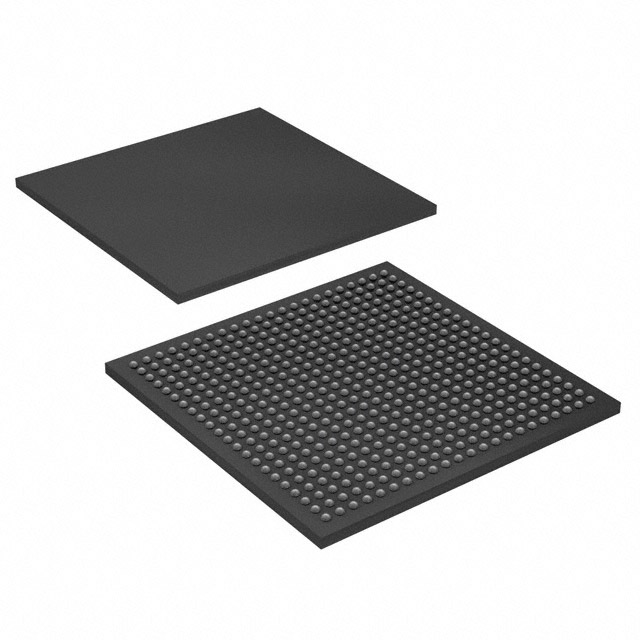
EP1K100EFI484-2
Search Product
Search Post
— IC芯片 | 连接器 | 传感器 | 被动器件 —
Search productSearch post
— IC芯片 | 连接器 | 传感器 | 被动器件 —
Consult the customer manager about the wholesale price.
consultation hotline:86-132-6715-2157
email:chipapexlimited@gmail.com
Contact the product manager for consultation. One-stop consultation is available.
Do you want a lower wholesale price? Please send us your inquiry and we will reply immediately.
Altera EP1K100EFI484-2 is used in FPGAs (Field Programmable Gate Array) category where interface timing, endurance expectations, and power behavior affect reliability. Key specs include Description (IC FPGA 333 I/O 484FBGA), Temperature (-40°C ~ 85°C (TA)), Package/case (484-BBGA), Mounting (Surface Mount), and Packaging (Tray).
Any tips for reliable operation with EP1K100EFI484-2?
Ensure robust power sequencing, adequate decoupling capacitors, and verify signal integrity on high-speed data buses.
What Number of Logic Elements/Cells does EP1K100EFI484-2 have?
4992
What supply voltage range does EP1K100EFI484-2 require?
2.375V ~ 2.625V
What is the package/case of EP1K100EFI484-2?
484-BBGA
For Altera EP1K100EFI484-2 in the FPGAs (Field Programmable Gate Array) category, teams usually prioritize documentation clarity and repeatable behavior in production. In many systems, careful use of interface logic reduces integration risk by making timing and signal integrity easier to validate. In real deployments, they are generally valuable when interface compatibility and hardware timing must be guaranteed rather than "best effort". In practice, with the basics in place, the design effort moves to the application context and the real failure modes seen in deployment. In practice, within test equipment, deterministic gating and capture improves repeatability across fixtures and operator cycles. In practice, within control and timing paths, simple gating enforces sequencing and interlocks where deterministic hardware behavior is preferred over firmware. Over the product lifecycle, it reduces maintenance burden by keeping behavior spec-driven and testable.
 EP1K100EFI484-2
The activity of extra discounts on wholesale prices is in full swing…
Please fill in your contact information and we will send you the latest wholesale price list.