ChipApex | Global Electronic Components Supplier
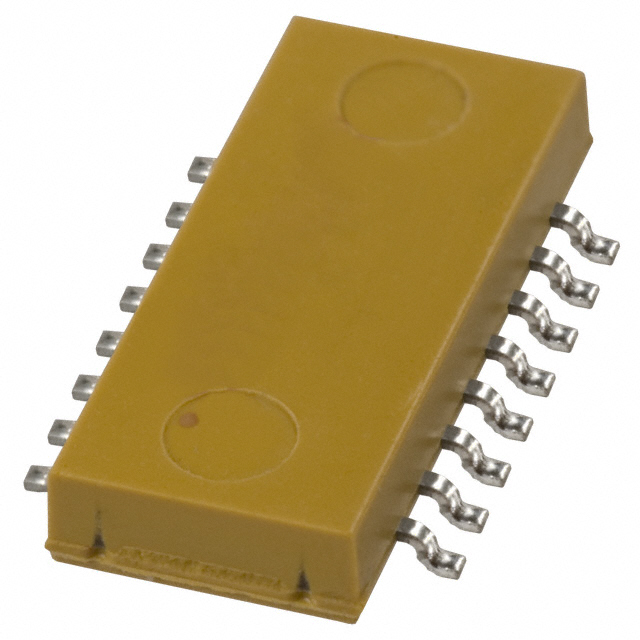
GL1L5MS200S-C
Search Product
Search Post
— IC芯片 | 连接器 | 传感器 | 被动器件 —
Search productSearch post
— IC芯片 | 连接器 | 传感器 | 被动器件 —
Consult the customer manager about the wholesale price.
consultation hotline:86-132-6715-2157
email:chipapexlimited@gmail.com
Contact the product manager for consultation. One-stop consultation is available.
Do you want a lower wholesale price? Please send us your inquiry and we will reply immediately.
Susumu GL1L5MS200S-C is sourced in Delay Lines category when teams want clear constraints and a repeatable validation path. Key specs include Description (IND DELAY LINE 2.0NS 1 OHM SMD), Series (GL1L), Packaging (Bulk), Temperature (-25°C ~ 85°C), and Package/case (16-SOIC (0.239", 6.06mm Width)).
What should I compare when selecting an alternate for GL1L5MS200S-C?
Compare footprint/pinout, key electrical limits, temperature range, and interface requirements, then validate under worst-case conditions.
Can you confirm the packaging for GL1L5MS200S-C?
Bulk
What is the operating temperature range of GL1L5MS200S-C?
-25°C ~ 85°C
What package type does GL1L5MS200S-C come in?
16-SOIC (0.239", 6.06mm Width)
Susumu GL1L5MS200S-C is a common choice in Delay Lines applications where the goal is to keep validation repeatable and avoid edge-case surprises during bring-up. In real products, clock behavior is validated against EMI sources, power integrity, and enclosure coupling paths. A solid timing choice keeps margins stable by reducing sensitivity to supply ripple, temperature drift, and routing-induced noise. Within automotive infotainment and camera links, stable clocking is validated across vibration and thermal cycling. Within automotive infotainment and camera links, they support high-speed interfaces that must tolerate thermal cycling and vibration without frame errors. Across measurement equipment, clean clocks reduce converter spurs and improve repeatability in benchtop instruments used for calibration workflows. Within most projects, the \"right\" choice is the one that stays inside margins while remaining easy to verify and support. A disciplined approach reduces the chance that a design only works under typical conditions on the bench.
 GL1L5MS200S-C
The activity of extra discounts on wholesale prices is in full swing…
Please fill in your contact information and we will send you the latest wholesale price list.