ChipApex | Global Electronic Components Supplier
GL2L5LS100D-C
Search Product
Search Post
— IC芯片 | 连接器 | 传感器 | 被动器件 —
Search productSearch post
— IC芯片 | 连接器 | 传感器 | 被动器件 —
Consult the customer manager about the wholesale price.
consultation hotline:86-132-6715-2157
email:chipapexlimited@gmail.com
Contact the product manager for consultation. One-stop consultation is available.
Do you want a lower wholesale price? Please send us your inquiry and we will reply immediately.
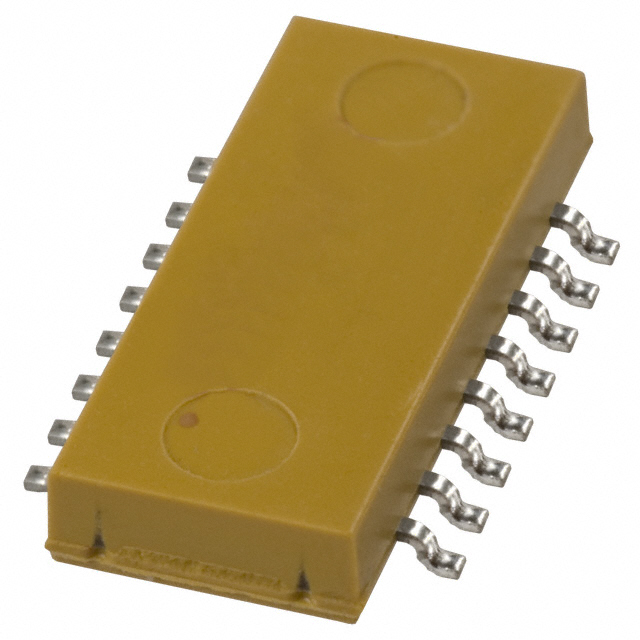
Susumu GL2L5LS100D-C is a component in Delay Lines category typically evaluated for fit, operating limits, and supportability in production. Key specs include Description (IND DELAY LINE 1.0NS 1 OHM SMD), Series (GL2L), Packaging (Bulk), Temperature (-25°C ~ 85°C), and Package/case (16-SOIC (0.239", 6.06mm Width)).
What details help you quote GL2L5LS100D-C quickly?
Share the part number (GL2L5LS100D-C), quantity, target delivery date, and any packaging or documentation requirements.
How is GL2L5LS100D-C mounted?
Surface Mount
How is GL2L5LS100D-C supplied (packaging)?
Bulk
What operating temperature range does GL2L5LS100D-C support?
-25°C ~ 85°C
In real deployments, susumu GL2L5LS100D-C is listed under the Delay Lines category and is commonly used when correctness, reliability, and qualification repeatability matter. For sampling and RF systems, deterministic lock behavior and stable phase noise can matter more than typical datasheet numbers. Well-behaved timing distribution reduces intermittent failures by keeping edges clean and deterministic across manufacturing variance. At that point, system-level margins and test access tend to decide whether the choice is comfortable for production. In industrial motion control, timing components must resist inverter noise so capture and PWM timing remains repeatable. Within embedded gateways, stable RTC and clocking improve logging accuracy and coordinated events across distributed sensor nodes. In high-speed digital designs, well-distributed clocks simplify timing closure and reduce re-spin risk caused by marginal setup/hold windows. In real deployments, repeatability across temperature, load, and noise is what keeps performance consistent.
 GL2L5LS100D-C
The activity of extra discounts on wholesale prices is in full swing…
Please fill in your contact information and we will send you the latest wholesale price list.