ChipApex | Global Electronic Components Supplier
LMH6611MK/NOPB
Search Product
Search Post
— IC芯片 | 连接器 | 传感器 | 被动器件 —
Search productSearch post
— IC芯片 | 连接器 | 传感器 | 被动器件 —
Consult the customer manager about the wholesale price.
consultation hotline:86-132-6715-2157
email:chipapexlimited@gmail.com
Contact the product manager for consultation. One-stop consultation is available.
Do you want a lower wholesale price? Please send us your inquiry and we will reply immediately.
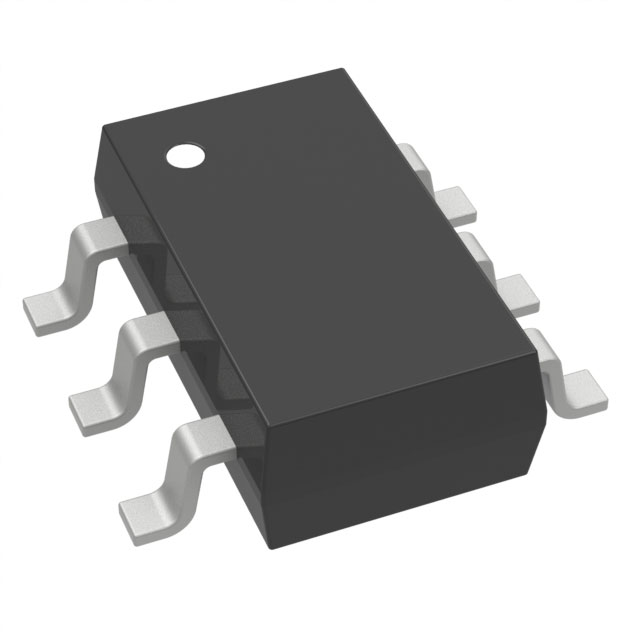
Texas Instruments LMH6611MK-NOPB is selected in Instrumentation, Op Amps, Buffer Amps category when gain/offset/noise margins must hold across temperature and production variance. Key specs include Description (IC OPAMP GP 1 CIRCUIT SOT23-THIN), Output type (Rail-to-Rail), Temperature (-40°C ~ 125°C), Package/case (SOT-23-6 Thin, TSOT-23-6), and Mounting (Surface Mount).
How do I validate LMH6611MK-NOPB in my design?
Verify stability under your expected capacitive load, confirm the common-mode voltage range, and check output swing limits.
Can you confirm the Number of Circuits for LMH6611MK-NOPB?
1
Which Voltage - Input Offset is listed for LMH6611MK-NOPB?
74 µV
Can you confirm the Voltage - Supply Span (Min) for LMH6611MK-NOPB?
2.7 V
Texas Instruments LMH6611MK-NOPB shows up under Instrumentation, Op Amps, Buffer Amps when designers want a well-bounded, datasheet-driven building block instead of a fragile board-level workaround. In real deployments, engineers generally validate gain-setting, filtering, and EMI robustness because common-mode interference is usually the dominant error source. Selection usually comes down to measurable margins: accuracy, noise, bandwidth, and how easily the design can be verified in production test. Good analog integration simplifies validation by reducing sensitive external networks that would otherwise vary across builds. In automotive sensing, mixed-signal paths survive transients and vibration while maintaining stable measurement margins. In medical instruments, low-drift in-amps condition biopotential and low-level sensor signals where noise and offset stability dominate the error budget. In data acquisition front ends, in-amps provide precise gain before conversion when channel matching and repeatability across production units are required.
 LMH6611MK/NOPB
The activity of extra discounts on wholesale prices is in full swing…
Please fill in your contact information and we will send you the latest wholesale price list.