ChipApex | Global Electronic Components Supplier
SEARCH
Search Product
Search Post
— 葡萄酒 | 威士忌 | 白兰地 | 啤酒 —
Search productSearch post
— 葡萄酒 | 威士忌 | 白兰地 | 啤酒 —
The trend of science and technology is changing rapidly.
Stay ahead with ChipApex Insights — technical deep dives, market trends, and sourcing tips for memory, microcontrollers, power management, and industrial-grade components. Trusted by engineers and procurement teams worldwide.
Your 3 kW server power supply passed all efficiency and load transient tests. But after 18 months in a hyperscaler data center, units began triggering “overvoltage protection (OVP) faults” during light-load operation—despite no actual output surge.
Root cause: Current Transfer Ratio (CTR) degradation in the feedback optocoupler. The standard PC817 used in the secondary-side regulation loop had lost 62% of its initial CTR due to prolonged exposure to 85°C ambient and continuous LED current. This reduced feedback gain caused the controller to overcompensate, driving the output to 13.2V (vs. 12V nominal)—tripping OVP.
This wasn’t a controller bug or resistor drift. It was an optoelectronic aging failure—hidden because most designs assume “if it works at T=0, it works forever.”
At ChipApex, we’ve traced over 20 field failures in high-reliability SMPS—from telecom rectifiers to AI server PSUs—to unmonitored optocoupler degradation. Below, Senior FAE Mr. Hong explains how to design feedback loops that survive 10+ years of thermal stress, not just pass lab validation.
Most designers select optocouplers based on initial CTR (e.g., 50–600%) but ignore long-term degradation under real operating conditions:
| Degradation Mechanism | What Happens | Field Consequence |
|---|---|---|
| LED luminous decay | IR LED output drops with time/temperature | Reduced collector current → weaker feedback |
| Phototransistor gain loss | HFE degrades at high Tj | Further reduces loop gain |
| No CTR margin budget | Design uses CTR near minimum spec | Small drift pushes loop unstable |
🔬 Real case: A 3 kW PSU used PC817XNNIP0F (CTR = 80% min @ 25°C). After 15,000 hours at 85°C, CTR dropped to 31%—below the controller’s required 35% for stable regulation at 10% load. Result: output drifted to 13.1V → OVP trip.
Never operate near the datasheet’s minimum CTR. Instead:
Design CTRmin≥2×CTRrequired by controllerDesign CTRmin≥2×CTRrequired by controller
Example: If your TL431 + UC3844 loop needs ≥40% CTR at end-of-life → choose an opto rated for ≥80% CTR after aging.
Use this industry-accepted model for CTR degradation:
CTR(t)=CTR0⋅e−0.0005⋅t⋅e(Tj−25)/10CTR(t)=CTR0⋅e−0.0005⋅t⋅e(Tj−25)/10
Where:
✅ At 85°C for 50,000 hrs → expect 50–70% CTR loss for standard optos.
✅ For 1–5 kW Server/Telecom SMPS:
✅ For Ultra-High Reliability (10+ years):
⚠️ Avoid: Generic PC817, LTV817, or EL817 in >500W or >70°C applications without accelerated life testing.
Client: Global cloud infrastructure provider
Problem:
Root Cause:
Solution:
Result:
Validated in ChipApex Power Supply Aging Lab with real thermal profiling.
Before finalizing your isolated feedback loop:
If any box is checked—you must use a high-reliability opto or consider digital isolation.
❌ “CTR is guaranteed for 10 years.”
→ Datasheets specify initial CTR—not end-of-life. Degradation is inevitable.
❌ “We’ll just increase LED current.”
→ Higher IF accelerates LED decay—doubling current can halve lifetime.
❌ “All optos with same pinout are equal.”
→ Internal LED/process differences cause 10× variation in lifetime—even within same part number.
“An optocoupler isn’t a wire—it’s a consumable component with a finite photon budget. If you don’t design for its aging, your power supply will fail long before its capacitors do.”
— Mr. Hong, Senior Field Application Engineer, ChipApex
We provide:
Mr. Hong is a Senior Field Application Engineer at ChipApex with 12+ years in power electronics and long-life hardware design. He specializes in capacitor reliability, thermal modeling, magnetic component selection, and failure analysis of field returns in renewable energy and industrial systems. He is certified in IEC 62109, UL 840, and IPC standards.

Stop intermittent boot failures. Learn sequencing control, backfeed prevention, and inrush management for reliable SoC power-up.
View details
Confused about clock sources? Compare quartz crystal, ceramic resonator, and MEMS oscillator for accuracy, cost, and reliability. Expert guide from ChipApex FAE.
View details
ESD on CAN bus triggers CMOS latch-up in automotive transceivers, causing silent system crashes. Discover latch-up immune solutions like TI TCAN1042V-Q1 per JESD78—validated by ChipApex in real service scenarios.
View details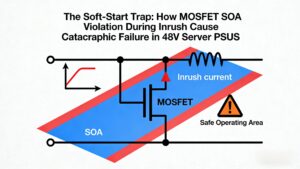
Slow soft-start can push MOSFETs into SOA violation during inrush—causing silent field failures. Discover SOA-safe solutions like TI LM5069 or Infineon CoolMOS with enhanced linear-mode ratings from ChipApex.
View details
The activity of extra discounts on wholesale prices is in full swing…
Please fill in your contact information and we will send you the latest wholesale price list.