ChipApex | Global Electronic Components Supplier
SEARCH
Search Product
Search Post
— IC芯片 | 连接器 | 传感器 | 被动器件 —
Search productSearch post
— IC芯片 | 连接器 | 传感器 | 被动器件 —
The trend of science and technology is changing rapidly.
You’ve just finished a flawless SMT run—only to find micro-cracks in your QFN or BGA packages during X-ray inspection. Or worse: your product passes factory test but fails after 3 months in the field. The silent killer? Moisture trapped inside moisture-sensitive devices (MSDs).
During reflow, that moisture turns to steam—and explodes the package from within. This “popcorning” may not break the IC immediately, but it creates cracks that grow under thermal cycling, leading to intermittent failures.
At ChipApex, we’ve helped dozens of clients recover from MSD-related yield loss. In this guide, Senior FAE Mr. Hong explains what MSL ratings really mean, how to manage MSDs correctly, and how to avoid one of the most preventable—but costly—manufacturing mistakes.
MSL (Moisture Sensitivity Level) is an industry standard (defined by IPC/JEDEC J-STD-020) that classifies how quickly a plastic-packaged IC absorbs moisture from the air—and how soon it must be soldered after opening its sealed bag.
There are 7 levels, from MSL 1 (unlimited floor life) to MSL 6 (mandatory bake before every use):
| MSL | Floor Life (at ≤30°C / 60% RH) | Typical Packages |
|---|---|---|
| 1 | Unlimited | Most through-hole, some large ceramics |
| 2 | 1 year | SOIC, TSSOP |
| 2a | 4 weeks | Some QFPs |
| 3 | 168 hours (7 days) | Most common: QFN, DFN, small BGAs |
| 4 | 72 hours (3 days) | Fine-pitch BGAs, stacked dies |
| 5 | 48 hours | High-density modules |
| 5a | 24 hours | Ultra-thin packages |
| 6 | Zero – bake required before use | Specialized RF/automotive |
⚠️ If you’re using QFN, DFN, or BGA parts, assume they’re at least MSL 3 unless proven otherwise.
Plastic IC packages are slightly porous. Over time, they absorb ambient moisture. During reflow (peak temps often >240°C), that water vaporizes instantly—creating internal pressure up to 100+ atmospheres.
Result:
And yes—you often can’t see it without X-ray or acoustic microscopy.
Per IPC/JEDEC J-STD-033:
💡 Pro Tip: Baking too aggressively can damage components—follow the standard exactly.
Counterfeit or old-stock MSDs may:
At ChipApex, all MSDs are:
A U.S. medtech client saw high failure rates in their ECG patch after reflow. X-ray revealed internal delamination in the QFN-24 MCU (MSL 3).
Root cause:
Solution:
Rework rate dropped to <0.3% within two production cycles.
❌ “If it passed electrical test, it’s fine.”
→ Popcorning causes mechanical damage—not always electrical.
❌ “We only assemble once a week, so it’s okay.”
→ MSL 3 = 7 days max. Humidity accelerates absorption.
❌ “All distributors store parts the same way.”
→ Many brokers store MSDs in non-climate-controlled warehouses. Always ask for storage conditions.
“Moisture sensitivity isn’t a ‘factory problem’—it’s a supply chain and design responsibility. Verify packaging, control storage, and never ignore the MSL label.”
— Mr. Hong, Senior Field Application Engineer, ChipApex
We supply millions of MSL-rated ICs—from MCUs and sensors to power ICs and RF modules—all managed per IPC/JEDEC J-STD-033 standards.
Every shipment includes:
Contact Our FAE Team for MSL-compliant sourcing, storage advice, or batch validation.
Mr. Hong is a Senior Field Application Engineer at ChipApex with over 12 years of experience in electronic component reliability, counterfeit detection, and manufacturing support. He has worked with clients across medical, automotive, and industrial sectors to improve yield, reduce field failures, and ensure compliance with IPC, JEDEC, and IEC standards. At ChipApex, he oversees incoming inspection protocols for moisture-sensitive and high-reliability components.
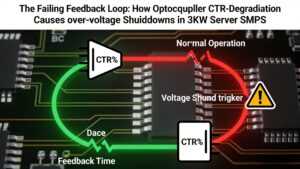
CTR degradation in feedback optocouplers causes false OVP trips in high-power SMPS. Discover long-life solutions like Broadcom ACPL-P481 or TI ISOM8710—validated per Telcordia by ChipApex.
View details
Discover what DRAM is, how it works, its types, and why choosing authentic, RoHS-compliant DRAM chips matters. Source reliable DRAM from ChipApex—global supplier with full traceability.
View details
Confused about LDO or buck? Learn when to use each based on noise, efficiency, and thermal needs. Real-world examples & expert advice from ChipApex FAE.
View details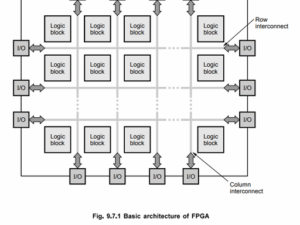
Learn the fundamental working principle of Field-Programmable Gate Arrays (FPGAs), including core architecture (CLBs, interconnects, I/O blocks), programming flow, advantages, and real-world applications in electronics and industrial systems.
View details
The activity of extra discounts on wholesale prices is in full swing…
Please fill in your contact information and we will send you the latest wholesale price list.