ChipApex | Global Electronic Components Supplier
SEARCH
Search Product
Search Post
— IC芯片 | 连接器 | 传感器 | 被动器件 —
Search productSearch post
— IC芯片 | 连接器 | 传感器 | 被动器件 —
The trend of science and technology is changing rapidly.
Stay ahead with ChipApex Insights — technical deep dives, market trends, and sourcing tips for memory, microcontrollers, power management, and industrial-grade components. Trusted by engineers and procurement teams worldwide.
Your 100 kW string inverter passed factory calibration with <0.5% metering error. But after six months in the Arizona desert, grid operators flagged it for over-reporting energy yield by 4.8%—triggering financial penalties and forced firmware recalibration.
Root cause: drift in the isolated ADC voltage reference. The internal bandgap reference of the isolated sigma-delta modulator (e.g., AMC1301) shifted by +1.2% due to prolonged exposure to 95°C ambient + self-heating. Since the DC-link voltage sensing chain relied on this reference, all power calculations were proportionally inflated.
This wasn’t a sensor or shunt resistor issue. It was a reference integrity failure—hidden because most designers assume “isolated ADC = accurate.”
At ChipApex, we’ve audited over 30 solar and EV charger platforms where unmonitored reference drift caused compliance violations with IEEE 1547, VDE-AR-N 4105, or UL 1741 SA. Below, Senior FAE Mr. Hong reveals how to design metrology-grade isolated sensing that stays accurate for 15+ years—not just at room temperature.
Most isolated amplifiers/modulators specify initial gain error (e.g., ±0.5%) but omit long-term drift under real thermal stress:
| Failure Mechanism | What Happens | Field Consequence |
|---|---|---|
| Bandgap reference drift | Internal reference shifts with time/temperature | Systematic offset in voltage/current reading |
| Gain drift of isolation barrier | Capacitive/magnetic coupling changes with aging | Scaling error in high-side measurement |
| No reference monitoring | No way to detect or compensate drift in-field | Silent energy billing errors |
🔬 Real case: A European inverter used AMC1301 (±0.5% initial gain) for DC-link sensing. After 8,000 hours at 85°C, reference drifted +1.8%—causing +1.8% over-reporting of kWh, violating VDE-AR-N 4105’s ±2% limit.
→ Don’t assume one IC solves both. Often, you need:
| Parameter | Target for Solar/EV | Where to Find It |
|---|---|---|
| Reference tempco | ≤5 ppm/°C | Datasheet “Typical Characteristics” |
| Long-term drift | ≤50 ppm/1k hrs | Reliability report or application note |
| Gain drift | ≤25 ppm/°C | Look for “gain vs. temperature” plot |
✅ Critical: Avoid parts that only specify “initial accuracy”—demand drift data.
✅ For Precision DC-Link & Phase Current Sensing:
✅ For Ultra-Stable External References:
⚠️ Avoid: Using isolated amps with internal-only references (e.g., AMC1301, ACPL-C87x) in revenue-grade metering without drift validation.
Client: North American solar OEM
Problem:
Root Cause:
Solution:
Result:
Validated in ChipApex Metrology Lab per IEC 62053-22 Class 0.5.
Before finalizing your sensing chain:
If any box is checked—you must use a solution with documented long-term drift performance.
❌ “Isolation voltage rating guarantees accuracy.”
→ 5 kV isolation ≠ 0.1% accuracy—they’re unrelated specs.
❌ “We’ll calibrate at production—it’ll stay accurate.”
→ Calibration corrects initial error, not drift over time/temperature.
❌ “Digital output means no drift.”
→ The analog front-end (reference, modulator) still drifts—even if output is digital.
“In energy metering, accuracy isn’t a feature—it’s a contract. If your isolated ADC’s reference drifts, you’re not just measuring wrong; you’re billing wrong.”
— Mr. Hong, Senior Field Application Engineer, ChipApex
We provide:
Mr. Hong is a Senior Field Application Engineer at ChipApex with 12+ years in power electronics and long-life hardware design. He specializes in capacitor reliability, thermal modeling, magnetic component selection, and failure analysis of field returns in renewable energy and industrial systems. He is certified in IEC 62109, UL 840, and IPC standards.
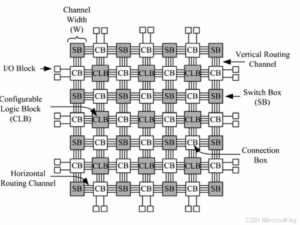
Explore FPGA programmable interconnect resources, including short-range, long-range & global types, programmability principles, and their impacts on signal delay, power consumption & resource utilization. Learn FPGA interconnect basics.
View details
SiC MOSFET body diode hard recovery during regen causes snap-off LC oscillations, triggering false desaturation faults in 800V traction inverters. Discover damping strategies and robust gate drivers like UCC21750 validated by ChipApex.
View details
Selecting the right TVS diode? Learn how clamping voltage, capacitance, and layout affect ESD protection on USB, HDMI & more. Expert guide from ChipApex FAE.
View details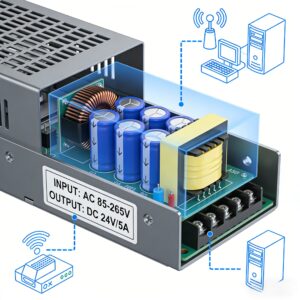
Learn how to protect your industrial IoT device from surges, noise, and reverse polarity—with input filtering, rugged DC-DC selection, and clean output design.
View details
The activity of extra discounts on wholesale prices is in full swing…
Please fill in your contact information and we will send you the latest wholesale price list.