ChipApex | Global Electronic Components Supplier
SEARCH
Search Product
Search Post
— IC芯片 | 连接器 | 传感器 | 被动器件 —
Search productSearch post
— IC芯片 | 连接器 | 传感器 | 被动器件 —
The trend of science and technology is changing rapidly.
Stay ahead with ChipApex Insights — technical deep dives, market trends, and sourcing tips for memory, microcontrollers, power management, and industrial-grade components. Trusted by engineers and procurement teams worldwide.
Your 11 kW onboard charger passed all electrical and thermal tests. But after mass deployment, customers complained of a “high-pitched whine” during charging—especially at night. Field units showed no fault codes, yet return rates soared.
Root cause: magnetostriction in the PFC boost inductor. Under variable-frequency control, the ferrite core physically vibrated at 8–15 kHz—within human hearing range. The noise wasn’t a safety issue, but it shattered user trust in product quality.
This isn’t a “cosmetic” problem. In consumer-facing power electronics—EV chargers, solar inverters, UPS systems—audible noise = perceived defect, even if performance is perfect.
At ChipApex, we’ve helped clients reduce inductor noise complaints by >90% across 12+ platforms. Below, Senior FAE Mr. Hong reveals how to design magnetic components that stay silent under real-world operating conditions—not just on the bench.
Most designers select inductors based on inductance, current rating, and DCR—ignoring mechanical behavior. But three hidden mechanisms cause audible noise:
| Mechanism | Physics Behind It | When It Occurs |
|---|---|---|
| Magnetostriction | Ferrite lattice changes shape under AC magnetic field → mechanical vibration | With variable-frequency control (e.g., PFC, LLC) |
| Winding resonance | Loose windings vibrate like guitar strings at switching harmonics | At light load or burst mode |
| Core gap vibration | Air gap in gapped cores acts like a speaker diaphragm | Under high ripple current |
🔬 Real case: A European wallbox manufacturer faced a 7% return rate due to “whining” at 12 kHz—traced to a standard unglued toroidal inductor with loose windings.
Noise suppression starts at the material and assembly level:
✅ Use low-magnetostriction ferrites:
✅ Choose mechanically damped constructions:
✅ Avoid: Unglued bobbins, open E-cores without potting, or generic “power inductors” with no acoustic data.
✅ For PFC & DC-DC Stages (EV, Solar, Industrial):
✅ For High-Power (>5 kW) Applications:
⚠️ Never use generic “10 µH power inductor” from commodity catalogs—most lack acoustic validation.
Client: EV charging OEM in Germany
Problem:
Solution:
Result:
Validated in ChipApex Acoustic Reliability Lab per IEC 60704-2.
Before finalizing your magnetics:
If any box is checked—acoustic performance must be specified.
❌ “Inductor noise only matters for audio equipment.”
→ Human hearing detects 20 Hz–20 kHz—any switching harmonic in that band causes complaints.
❌ “Higher inductance reduces noise.”
→ Oversized inductors can resonate at lower frequencies—making noise worse.
❌ “We’ll just add foam around it.”
→ Foam masks but doesn’t eliminate vibration; long-term reliability suffers.
“In power electronics, silence isn’t golden—it’s mandatory. If your inductor can be heard, your design isn’t ready for the real world.”
— Mr. Hong, Senior Field Application Engineer, ChipApex
We provide:
Mr. Hong is a Senior Field Application Engineer at ChipApex with 12+ years in power electronics and long-life hardware design. He specializes in capacitor reliability, thermal modeling, magnetic component selection, and failure analysis of field returns in renewable energy and industrial systems. He is certified in IEC 62109, UL 840, and IPC standards.

Stop hidden PCB shorts caused by moisture and ions. Learn layout rules, cleaning specs, and coating strategies to prevent ECM in humid environments.
View details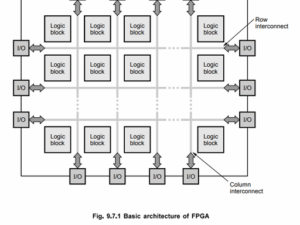
Learn the fundamental working principle of Field-Programmable Gate Arrays (FPGAs), including core architecture (CLBs, interconnects, I/O blocks), programming flow, advantages, and real-world applications in electronics and industrial systems.
View details
High-side switching transients couple via isolation capacitance into ADC reference paths, causing dynamic gain errors in solar inverters. Discover solutions like ADuM7703 with external REF and local decoupling validated by ChipApex.
View details
Stop Wi-Fi throughput drops. Learn power filtering, PCB layout, and PLL settings to achieve
View details
The activity of extra discounts on wholesale prices is in full swing…
Please fill in your contact information and we will send you the latest wholesale price list.