ChipApex | Global Electronic Components Supplier
SEARCH
Search Product
Search Post
— IC芯片 | 连接器 | 传感器 | 被动器件 —
Search productSearch post
— IC芯片 | 连接器 | 传感器 | 被动器件 —
The trend of science and technology is changing rapidly.
Field – Programmable Gate Arrays (FPGAs) are highly versatile integrated circuits that can be configured to perform a wide range of digital functions. Among the key components of an FPGA, the input/output (I/O) unit plays a crucial role in connecting the internal logic of the FPGA to the external world. Let’s explore the structure and functions of these I/O units in detail.
Input buffers are the first elements in the I/O unit that receive external signals. Their primary function is to condition the incoming signals to make them suitable for processing within the FPGA. When an external signal arrives at the input pin of the FPGA, it may have varying voltage levels and impedance characteristics.
The input buffer adjusts the voltage levels to match the internal operating voltage of the FPGA. It also provides a high – input impedance, which prevents the external circuit from being loaded by the FPGA’s input. This ensures that the external signal remains undistorted as it enters the FPGA. For example, if an external sensor outputs a low – voltage signal, the input buffer can amplify it to a level that can be properly recognized by the internal logic of the FPGA.
Output drivers are responsible for transmitting the processed signals from the FPGA to the external devices. They convert the internal logic levels of the FPGA into appropriate voltage and current levels for the external circuit. The output driver can be configured to drive different types of loads, such as other integrated circuits, LEDs, or motors.
Depending on the application requirements, the output driver can be set to different drive strengths. A high – drive strength output can supply more current to the load, which is useful for driving heavy loads like motors. On the other hand, a low – drive strength output is suitable for driving light loads such as other low – power integrated circuits, reducing power consumption.
I/O banks are groups of I/O pins that share common electrical characteristics. These characteristics include voltage levels, slew rates (the rate of change of the output voltage), and drive strengths. By organizing the I/O pins into banks, it becomes easier to manage the electrical interface between the FPGA and the external world.
For example, if an FPGA needs to interface with multiple devices that operate at different voltage levels, different I/O banks can be configured to match the voltage requirements of each device. This allows for a more flexible and efficient design, as the I/O pins within a bank can be optimized for a specific set of electrical parameters.
One of the important aspects of configuring the I/O unit is setting the appropriate voltage levels. FPGAs support a wide range of voltage standards, such as LVTTL (Low – Voltage Transistor – Transistor Logic), LVCMOS (Low – Voltage Complementary Metal – Oxide – Semiconductor), and differential standards like LVDS (Low – Voltage Differential Signaling).
The input buffers can be configured to accept different input voltage levels according to the external device’s output. Similarly, the output drivers can be set to generate the correct output voltage levels to match the input requirements of the receiving device. This voltage – level compatibility is essential for reliable data transfer between the FPGA and the external components.
Slew rate refers to the speed at which the output voltage of the output driver changes. Controlling the slew rate is important for several reasons. A high slew rate can lead to electromagnetic interference (EMI) issues, as rapid changes in voltage can generate unwanted electrical noise. On the other hand, a very low slew rate can slow down the signal transmission, affecting the overall performance of the system.
In the I/O unit, the slew rate of the output drivers can be adjusted through configuration. By selecting an appropriate slew rate, designers can balance the need for fast signal transmission with the requirement to minimize EMI. For example, in a high – speed data communication application, a relatively high slew rate may be used to ensure fast data transfer, while in a low – noise environment, a lower slew rate can be chosen to reduce EMI.
As mentioned earlier, the drive strength of the output drivers can be configured to match the load requirements. The drive strength determines the amount of current that the output driver can supply to the load. A higher drive strength means more current can be delivered, which is useful for driving large – capacitance loads or long – distance connections.
However, using a high drive strength when it is not necessary can lead to increased power consumption and potential signal integrity issues. Therefore, designers need to carefully select the appropriate drive strength based on the characteristics of the external load. For example, when driving a low – power microcontroller, a low – drive strength output may be sufficient, while driving a large motor may require a high – drive strength output.
The I/O pins of an FPGA are vulnerable to electrostatic discharge, which can occur when a charged object comes into contact with the pin. ESD can cause damage to the internal circuitry of the FPGA, leading to permanent failure. To protect against ESD, I/O units are equipped with ESD protection circuits.
These protection circuits typically consist of diodes and resistors that divert the ESD current away from the sensitive internal components of the FPGA. When an ESD event occurs, the diodes conduct, allowing the high – voltage ESD pulse to be safely discharged to the ground or power supply, protecting the internal logic of the FPGA.
In some applications, it may be necessary to connect or disconnect external devices from the FPGA while the system is powered on, a process known as hot – swapping. Hot – swapping can cause voltage surges and current spikes on the I/O pins, which can potentially damage the FPGA.
To enable hot – swapping, I/O units are designed with features such as clamping circuits and current – limiting resistors. The clamping circuits limit the voltage on the I/O pins to a safe level during hot – swapping, while the current – limiting resistors prevent excessive current from flowing into the FPGA. These features ensure that the FPGA can withstand the electrical stresses associated with hot – swapping without damage.
In high – speed data communication applications, signal integrity is of utmost importance. High – speed signals can be affected by factors such as crosstalk (interference between adjacent signals), attenuation (reduction in signal strength over distance), and reflection (when a signal bounces back from an impedance mismatch).
To improve signal integrity for high – speed signals, I/O units may incorporate features such as pre – emphasis and equalization. Pre – emphasis boosts the high – frequency components of the signal at the transmitter side, compensating for the attenuation that occurs during transmission. Equalization, on the other hand, is used at the receiver side to correct for the distortion caused by crosstalk and other factors, ensuring that the received signal is a faithful representation of the transmitted signal.
Explore the architectural foundations, operational modes (RAM, FIFO, CAM), performance optimization and error correction mechanisms of FPGA embedded memory blocks, helping engineers design high-performance low-latency systems.
View details
Explore FPGA programmable interconnect resources, including short-range, long-range & global types, programmability principles, and their impacts on signal delay, power consumption & resource utilization. Learn FPGA interconnect basics.
View details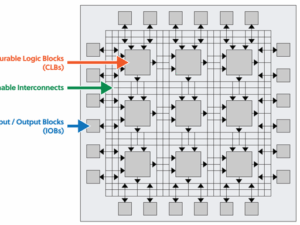
Explore the core of FPGAs - Configurable Logic Blocks (CLBs). Learn about LUTs, flip-flops, multiplexers, their configuration methods, and how CLBs impact FPGA logic density, speed, and power consumption. Essential guide for FPGA designers.
View details
Stop Wi-Fi throughput drops. Learn power filtering, PCB layout, and PLL settings to achieve
View details
Global Electronic Component Market Trends: Multiple Forces Driving Changes in the Market Landscape
View details
[Shenzhen/Shanghai/Beijing, January 2025] — As global digital transformation accelerates, the electronic components industry has reached a critical inflection point in 2025. Emerging fields such as AIoT, quantum computing, and 6G R&D are dr...
View details
Stop failing EFT tests. Learn PCB layout rules, filtering topologies, and IC selection to pass IEC 61000-4-4 Level 4—without over-engineering.
View details
The activity of extra discounts on wholesale prices is in full swing…
Please fill in your contact information and we will send you the latest wholesale price list.