ChipApex | Global Electronic Components Supplier
SEARCH
Search Product
Search Post
— IC芯片 | 连接器 | 传感器 | 被动器件 —
Search productSearch post
— IC芯片 | 连接器 | 传感器 | 被动器件 —
The trend of science and technology is changing rapidly.
Field – Programmable Gate Arrays (FPGAs) have revolutionized the world of digital circuit design, offering a high level of flexibility and customization. One of the core components that make FPGAs so versatile is the configurable logic block (CLB). These CLBs are the building blocks that enable the implementation of a wide variety of digital functions within an FPGA. Let’s delve into the details of these crucial elements.
Look – up tables are a fundamental part of CLBs. A LUT is essentially a small memory element that can be programmed to implement any combinational logic function. For example, a 4 – input LUT has 16 possible input combinations (since 2^4 = 16). By storing the appropriate output values in the LUT’s memory cells for each of these input combinations, it can perform any 4 – input combinational logic operation.
The use of LUTs allows for a high degree of flexibility in implementing logic functions. Instead of having fixed – function logic gates, designers can program the LUTs to perform the specific functions required by their application. This reduces the need for a large number of different types of logic gates on the FPGA chip, making the design more compact and efficient.
Flip – flops are another essential component within CLBs. They are sequential logic elements that can store a single bit of data. In an FPGA, flip – flops are used to implement registers, which are crucial for storing intermediate results in digital circuits. For instance, in a counter circuit, flip – flops are used to store the current count value, which is updated on each clock cycle.
Flip – flops can be configured to operate in different modes, such as D – type, T – type, or JK – type, depending on the requirements of the digital circuit. This configurability allows designers to use the same set of flip – flops in different parts of the FPGA to implement various sequential logic functions, enhancing the overall flexibility of the device.
Multiplexers (MUXes) are also commonly found in CLBs. A MUX is a device that selects one of several input signals and forwards the selected input to a single output line. In an FPGA, MUXes are used to route signals between different parts of the CLB or between different CLBs.
For example, a MUX can be used to select between the output of a LUT and an external input signal and forward it to a flip – flop. This ability to route signals flexibly is crucial for implementing complex digital circuits on an FPGA, as it allows for the dynamic reconfiguration of signal paths based on the design requirements.
The programming of LUTs is a key aspect of configuring CLBs. During the FPGA configuration process, the values stored in the LUTs’ memory cells are set according to the desired combinational logic functions. This is typically done by loading a configuration bitstream into the FPGA’s configuration memory.
The configuration bitstream contains information about the logic functions to be implemented by each LUT in the CLBs. By changing the values in the LUTs, designers can re – program the FPGA to perform different digital functions without having to modify the physical hardware. This re – programmability is one of the main advantages of FPGAs over traditional application – specific integrated circuits (ASICs).
Flip – flops within CLBs can also be configured to meet different design requirements. The configuration options for flip – flops include setting the clock edge (rising or falling) on which the flip – flop should update its output, enabling or disabling the reset and preset functions, and selecting the input source for the flip – flop.
For example, in a synchronous digital circuit, the flip – flops are typically configured to update their outputs on the rising edge of the clock signal. The reset and preset functions can be used to initialize the flip – flops to a known state at the start of operation or to clear any unwanted data during normal operation. By configuring these parameters, designers can ensure that the flip – flops operate correctly within the overall digital circuit.
The configuration of MUXes in CLBs is crucial for proper signal routing. The control signals for the MUXes determine which input signal is selected and forwarded to the output. During the FPGA design process, designers specify the routing of signals through the MUXes based on the logic requirements of the circuit.
For instance, if a particular signal needs to be routed from a LUT output to a flip – flop input, the appropriate MUX control signals are set to select the LUT output as the input to the MUX that feeds the flip – flop. This flexible signal routing allows for the implementation of complex digital circuits with multiple interconnected components on an FPGA.
The design of CLBs has a significant impact on the logic density of an FPGA, which refers to the number of logic gates or equivalent logic elements that can be implemented on the chip. By using LUTs, flip – flops, and MUXes in an efficient manner, CLBs can be packed closely together on the FPGA chip, increasing the logic density.
A higher logic density means that more complex digital circuits can be implemented on a single FPGA, reducing the need for multiple chips and simplifying the overall system design. Additionally, a high logic density can also lead to cost savings, as fewer chips are required to implement a given functionality.
The speed of operation of an FPGA is also influenced by the design of its CLBs. The propagation delay through the LUTs, flip – flops, and MUXes within the CLBs determines the overall speed of the digital circuit implemented on the FPGA.
To improve the speed of operation, FPGA designers use techniques such as optimizing the LUT structure to reduce the number of logic levels, using high – speed flip – flops with low setup and hold times, and minimizing the signal routing delays through the MUXes. By carefully designing the CLBs, it is possible to achieve high – speed digital circuits on an FPGA, making it suitable for applications that require real – time processing.
The power consumption of an FPGA is another important consideration, and the design of CLBs plays a role in this as well. The power consumed by LUTs, flip – flops, and MUXes depends on factors such as the number of active logic elements, the clock frequency, and the signal activity.
To reduce power consumption, FPGA designers can use techniques such as power – gating, where unused CLBs or parts of CLBs are turned off to save power, and optimizing the logic design to minimize the number of transitions in the signals, which reduces the dynamic power consumption. By considering power consumption during the design of CLBs, it is possible to create energy – efficient FPGAs for various applications.

Principles of Embedded Memory Blocks in Field-Programmable Gate Arrays (FPGAs) Field-Programmable Gate Arrays (FPGAs) integrate configurable logic with embedded memory blocks, enabling flexible, high-performance designs for applications like da...
View details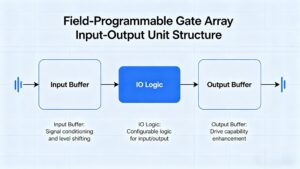
A detailed guide to FPGA I/O unit structure, including input buffers, output drivers, I/O banks, electrical configuration, signal integrity and protection features for engineers.
View details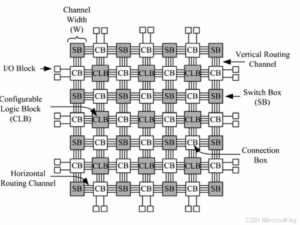
Explore FPGA programmable interconnect resources, including short-range, long-range & global types, programmability principles, and their impacts on signal delay, power consumption & resource utilization. Learn FPGA interconnect basics.
View details
Negative ringing on gate drivers causes false MOSFET turn-on and shoot-through in 800V EV inverters. Discover robust solutions like Infineon 1ED3461 with active Miller clamp—validated per ISO 26262 by ChipApex.
View details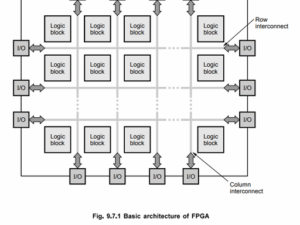
Learn the fundamental working principle of Field-Programmable Gate Arrays (FPGAs), including core architecture (CLBs, interconnects, I/O blocks), programming flow, advantages, and real-world applications in electronics and industrial systems.
View details
Stop hidden PCB shorts caused by moisture and ions. Learn layout rules, cleaning specs, and coating strategies to prevent ECM in humid environments.
View details
Avoid BLE dropouts, GNSS errors, and LTE sync failures with proper clock tree design. Learn layout rules, component selection, and real fixes.
View details
The activity of extra discounts on wholesale prices is in full swing…
Please fill in your contact information and we will send you the latest wholesale price list.